



Condenser vs Radiator: Key Differences in Heat Management
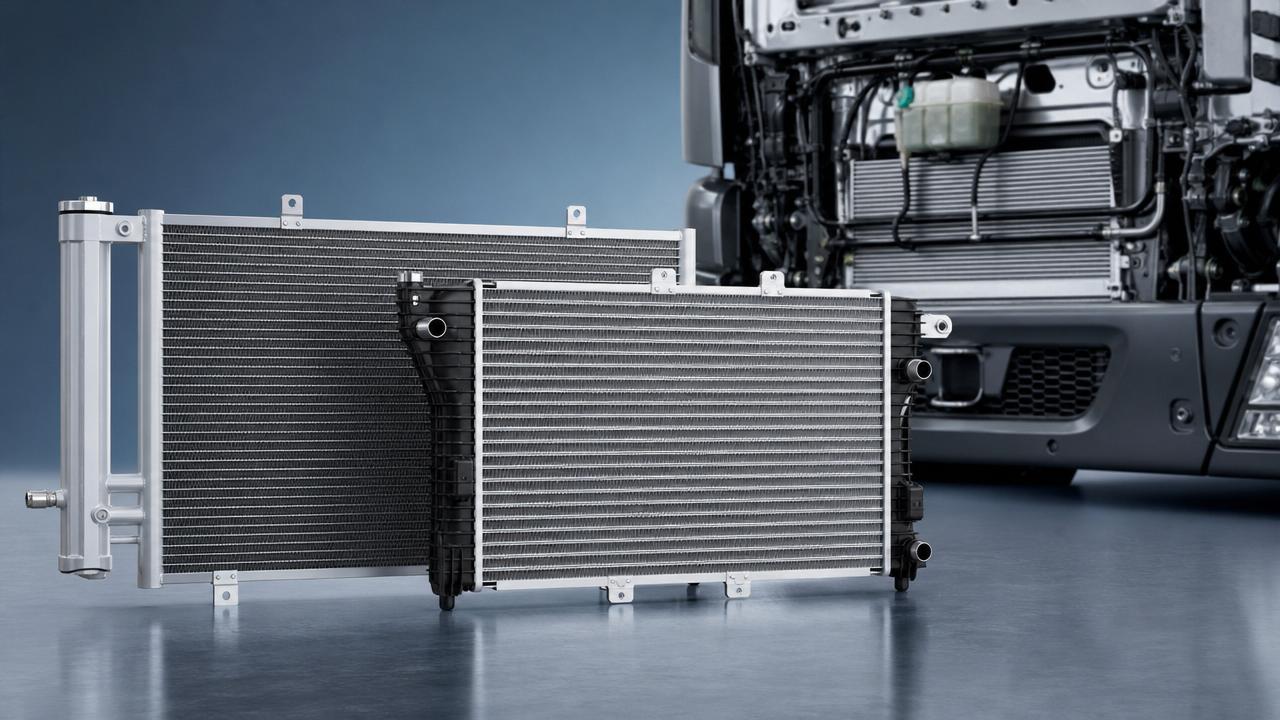
Why does the condenser vs radiator comparison matter?
When comparing a condenser vs radiator, understanding their distinct roles in heat management is essential for choosing the right cooling component.
Although both transfer heat, a Condenser is designed to release refrigerant heat, while a radiator cools engine or system fluids.
For the auto parts sector, this difference affects efficiency, durability, installation, and maintenance planning.
In heavy trucks, passenger vehicles, construction machinery, and new energy systems, wrong component matching can reduce cooling capacity and shorten service life.
Liaocheng Xinde Auto Parts Co., Ltd., founded in 2018, focuses on radiators, intercoolers, construction machinery radiators, and new energy radiator modules.
Its rapid growth and recognized quality background reflect how important advanced thermal parts have become in modern vehicle systems.
What is a Condenser, and what does it do?
A Condenser is a heat exchanger used mainly in air conditioning and refrigeration circuits.
Its task is to remove heat from high-pressure refrigerant gas and convert that gas into a liquid.
This phase change is the key difference in the condenser vs radiator discussion.
A radiator cools liquid without changing its state, but a Condenser handles refrigerant during compression and condensation.
Most automotive condensers sit near the front of the vehicle.
Airflow from driving speed or cooling fans carries away heat from the fins and tubes.
If the Condenser becomes blocked, bent, or contaminated, air conditioning performance drops quickly.
Common Condenser materials include aluminum because it offers low weight, corrosion resistance, and efficient heat transfer.
Typical Condenser applications
- Passenger vehicle air conditioning systems
- Heavy truck cabin cooling modules
- Construction machinery HVAC units
- Electric vehicle thermal management assemblies
What is a radiator, and how is it different?
A radiator is also a heat exchanger, but its role is different.
It removes heat from engine coolant, hydraulic fluid, or other circulating liquids.
In the condenser vs radiator comparison, the radiator protects the engine or power system from overheating.
Hot coolant enters the radiator, passes through tubes, and releases heat through fins into the surrounding air.
The cooled fluid then returns to the engine or system loop.
Radiators are vital in diesel trucks, buses, agricultural machines, and new energy platforms.
Their design must match pressure, flow rate, vehicle load, climate, and vibration conditions.
A practical example is RADIATOR FOR VOLVO XD031, built for Volvo applications and linked with models 22062259, 65479, and 85013015.
Such matching matters because dimensions, mounting points, and cooling capacity directly influence stable operation.
Key radiator functions
- Control engine operating temperature
- Reduce thermal stress on critical parts
- Support fuel efficiency and emissions stability
- Improve durability in continuous heavy-duty work
Condenser vs radiator: what are the main technical differences?
The condenser vs radiator topic becomes clearer when comparing function, medium, and operating conditions side by side.
Both parts often look similar because each uses tubes and fins.
However, similar appearance should never replace technical verification.
Pressure level, internal flow design, and application purpose are not interchangeable.
How do you choose between a Condenser and a radiator for an application?
In most cases, the system architecture decides the answer before price does.
If the circuit is refrigerant-based, a Condenser is required.
If the goal is coolant temperature control, a radiator is the correct component.
Still, several selection factors deserve close attention.
Selection checklist
- Confirm the heat source and fluid type
- Check heat rejection requirements
- Review operating pressure and temperature range
- Measure installation space and airflow path
- Match OE part numbers or validated replacement models
- Consider corrosion resistance and vibration strength
For heavy-duty equipment, underestimating thermal load is a common mistake.
A compact unit may fit physically but fail under long climbing, idle load, or hot-weather operation.
That is why product validation, material quality, and application testing are central in auto parts sourcing.
What mistakes are common in the condenser vs radiator decision?
Several errors appear frequently when evaluating condenser vs radiator options.
The first is assuming both parts are interchangeable because they share a similar external structure.
They are not interchangeable in actual system engineering.
Another mistake is choosing only by dimensions.
Core thickness, fin density, tube design, and pressure tolerance also matter.
A third mistake is ignoring maintenance conditions.
Dust, mud, salt spray, and vibration can sharply change service life.
Poor cleaning practices can bend fins and restrict airflow.
Leak diagnosis is also often delayed.
A Condenser leak may reduce cooling gradually, while a radiator leak can escalate into severe overheating.
Quick risk reminder table
How do maintenance, cost, and lifecycle compare?
Maintenance needs depend on the environment, not only the part type.
In dusty roads or job sites, both Condenser and radiator fins need regular inspection.
Blocked airflow increases thermal stress across the entire vehicle.
A radiator may face coolant contamination, corrosion, or hose-related leaks.
A Condenser may suffer from stone impact, refrigerant leakage, or surface damage.
Lifecycle cost should include more than the purchase price.
It should include downtime risk, repair labor, energy efficiency, and replacement frequency.
For Volvo-related cooling replacement, checking a validated option such as RADIATOR FOR VOLVO XD031 can help align fitment with actual service requirements.
A well-matched part usually saves more over time than a cheaper but mismatched alternative.
FAQ: what should be remembered about condenser vs radiator?
Is a Condenser the same as a radiator?
No. Both transfer heat, but a Condenser handles refrigerant and phase change, while a radiator cools liquid coolant.
Can one replace the other?
No. The condenser vs radiator difference is functional, structural, and system-specific.
Which one is more critical?
Both are critical, but failure consequences differ. Radiator failure often threatens engine safety more directly.
How can service life be extended?
Keep fins clean, maintain proper fluid quality, inspect leaks early, and use application-matched components.
What is the best buying approach?
Start with system type, OE reference, operating load, and environmental conditions rather than price alone.
Conclusion: how should you evaluate condenser vs radiator options?
The condenser vs radiator comparison is about more than names.
It is about matching heat transfer function to the real demands of the vehicle or machine.
A Condenser supports refrigerant cooling, while a radiator protects engines and fluid-based systems from excess heat.
Correct selection improves reliability, efficiency, and long-term value in auto parts applications.
Review technical parameters, verify fitment, and choose proven thermal components suited to actual operating conditions.
That step will make every condenser vs radiator decision more accurate and more cost-effective.