



Condenser Maintenance Mistakes That Raise Costs
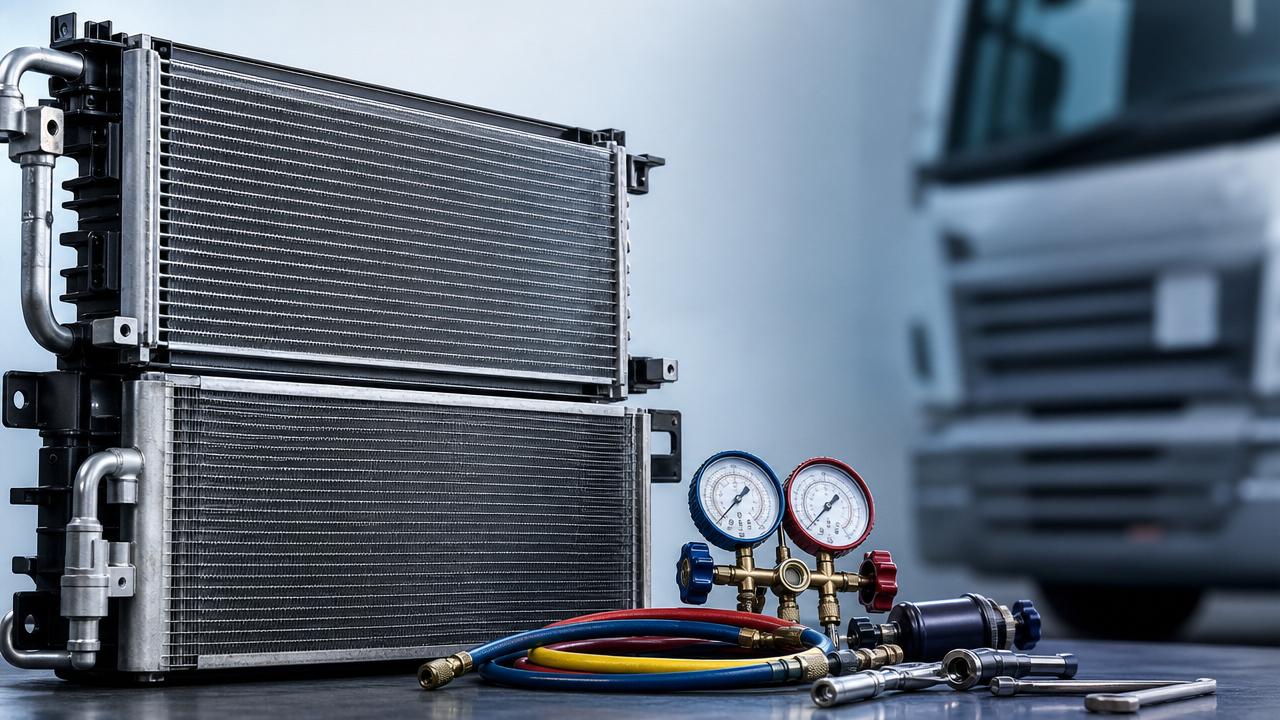
A poorly maintained Condenser can quietly increase repair costs, reduce cooling efficiency, and shorten the service life of heavy truck and machinery cooling systems.
Many expensive failures begin with small errors, including harsh cleaning, ignored leaks, weak pressure checks, or unsuitable replacement parts.
For heavy-duty vehicles, a Condenser is not an isolated part. It affects engine load, cabin cooling, compressor life, and system reliability.
Basic Role of a Condenser in Cooling Systems
A Condenser removes heat from high-pressure refrigerant after it leaves the compressor. This process changes vapor into liquid.
In trucks, buses, construction machinery, and new energy vehicles, the Condenser often works near radiators, intercoolers, and fans.
Because of this position, dust, mud, insects, oil mist, and road salt can reduce airflow across the Condenser surface.
When airflow drops, pressure rises. The compressor works harder, fuel consumption increases, and cooling performance becomes unstable.
A healthy Condenser supports stable refrigerant pressure, faster cabin cooling, and lower stress on connected thermal management components.
Industry Background and Current Maintenance Pressure
Heavy trucks and machinery now operate under tighter schedules, higher loads, and more extreme temperature changes.
Cooling components face more vibration, more idle time, and more contamination from mines, ports, construction sites, and long-distance logistics.
A Condenser failure can also create hidden costs beyond one replacement. It may damage compressors, seals, hoses, and electronic controls.
Cleaning Mistakes That Reduce Condenser Efficiency
Incorrect cleaning is one of the most common reasons a Condenser loses performance after maintenance.
High-pressure water sprayed too close can flatten fins. Bent fins reduce heat exchange and restrict airflow.
Acidic or alkaline cleaners may corrode aluminum surfaces. Corrosion creates weak points and increases leak risk.
Cleaning only the visible front surface is another costly mistake. Dirt often remains between the Condenser and radiator.
- Use controlled water pressure and keep the nozzle at a safe distance.
- Clean in the opposite direction of normal airflow when possible.
- Inspect the space between stacked cooling parts.
- Straighten damaged fins carefully with suitable tools.
A clean Condenser lowers operating pressure, improves cooling stability, and helps prevent premature compressor replacement.
Leak Detection Errors That Increase Repair Costs
Small leaks are often missed when inspection focuses only on large cracks or obvious refrigerant loss.
A Condenser may leak at welded joints, tube ends, mounting stress points, or areas damaged by stones.
Oil residue around the Condenser should never be ignored. Refrigerant may escape while lubricant leaves a visible trace.
Adding refrigerant without locating the leak only delays failure. It also raises operating costs and environmental risk.
Reliable Leak Check Practices
- Use nitrogen pressure testing within safe system limits.
- Apply leak detection solution on joints and suspected areas.
- Check mounting brackets for vibration-related stress.
- Confirm repair quality before recharging refrigerant.
Correct leak diagnosis protects the Condenser, compressor, expansion valve, and connected hoses from repeated damage.
Pressure Testing and Refrigerant Handling Mistakes
Pressure testing is useful, but poor technique may damage the Condenser or hide the real fault.
Overpressure can deform thin tubes and weaken brazed areas. Underpressure may fail to reveal small leaks.
Air should not be used casually for pressure tests. Moisture can enter the system and create corrosion or ice blockage.
Incorrect refrigerant charge is another expensive issue. Too much charge raises pressure, while too little charge reduces cooling.
Part Selection Mistakes in Heavy-Duty Applications
A Condenser replacement should match the working environment, mounting structure, refrigerant type, and heat rejection demand.
Choosing only by appearance can lead to poor fit, vibration damage, or lower heat transfer capacity.
For heavy trucks, radiator and Condenser performance are closely linked. Poor airflow through one component affects the other.
Liaocheng Xinde Auto Parts Co., Ltd. focuses on radiators, intercoolers, construction machinery radiators, and new energy radiator modules.
Its experience in thermal components supports more stable cooling solutions for demanding vehicle platforms.
For Benz-related cooling replacement needs, radiator for benz can be considered within a complete system review.
A well-matched radiator helps maintain airflow balance around the Condenser and supports dependable thermal performance.
Typical Application Scenarios and Failure Patterns
Different operating scenarios create different Condenser maintenance priorities. Understanding these patterns improves fault prevention.
These patterns show why one Condenser maintenance method cannot fit every working condition.
Installation Mistakes That Shorten Service Life
Even a quality Condenser may fail early if installation details are ignored.
Forced alignment can create stress at tubes, side plates, and mounting points. Vibration then turns stress into cracks.
Old seals should not be reused. A flattened O-ring may leak after temperature cycling and pressure changes.
Protective caps should stay in place until installation. Open ports allow moisture and dirt to enter the Condenser.
Installation Checklist
- Compare mounting points before final assembly.
- Replace O-rings with correct material and size.
- Use proper torque on fittings and brackets.
- Confirm fan shroud, radiator, and Condenser clearance.
- Check that hoses do not rub against sharp edges.
Practical Maintenance Schedule for Cost Control
A planned Condenser maintenance schedule reduces emergency repairs and improves vehicle uptime.
Inspection frequency should reflect operating dust, ambient temperature, mileage, idle time, and load conditions.
Records are important. Pressure values, leak results, and cleaning dates help identify repeat Condenser faults.
Business Value of Better Condenser Maintenance
Good Condenser maintenance creates measurable value across the whole cooling system.
It reduces compressor load, stabilizes cabin cooling, and helps prevent unnecessary refrigerant replacement.
It also protects nearby radiators and intercoolers by keeping airflow pathways clear and efficient.
For fleet service operations, fewer repeat failures mean lower downtime and more predictable maintenance budgeting.
For parts supply chains, correct diagnosis reduces returns caused by installation errors or system contamination.
Action Steps for More Reliable Cooling Performance
Start with a full cooling stack inspection instead of checking the Condenser alone.
Confirm airflow, fan speed, refrigerant charge, mounting condition, and leak status before replacing major parts.
Use compatible components that match vehicle platform, operating environment, and thermal load requirements.
A Condenser should be cleaned gently, tested correctly, installed without stress, and protected from contamination.
These simple steps reduce avoidable cost and support reliable heavy-duty cooling performance in demanding conditions.
When failures repeat, review the complete system before blaming one part. Most Condenser problems have a wider cause.