



Choosing a Condenser for Off-Road Equipment
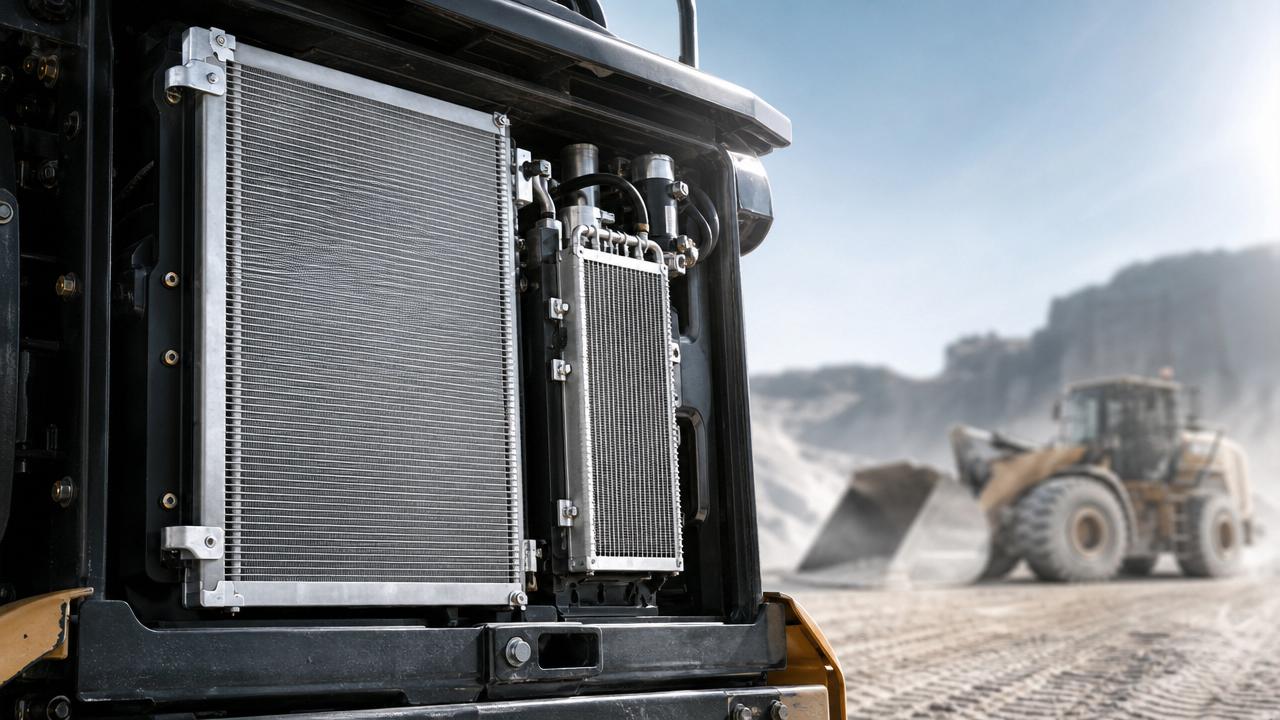
Selecting the right Condenser for off-road equipment is critical to keeping construction machinery, heavy-duty vehicles, and project fleets operating reliably under extreme heat, dust, vibration, and long working hours. For project managers and engineering leaders, the right choice directly affects uptime, maintenance costs, fuel efficiency, and overall project delivery. This guide explains what to evaluate when choosing a condenser, from cooling performance and material durability to supplier capability and long-term parts support.
In off-road operations, cooling components are not small accessories; they are production-critical parts. A delayed excavator, wheel loader, concrete pump, or heavy truck can affect 3 to 5 downstream work steps on a project site. For that reason, condenser selection should be treated as an engineering and procurement decision, not only a price comparison.
Why the Condenser Matters in Off-Road Equipment
A Condenser is responsible for rejecting heat from the air-conditioning or thermal management circuit. In construction machinery, mining vehicles, agricultural machines, and heavy-duty project fleets, it must work while airflow is restricted by mud, dust, debris, and low-speed operation.
For project managers, the business impact is measurable. A cooling failure may stop a machine for 4 to 12 hours, require emergency labor, and interrupt site coordination. If the equipment operates in ambient temperatures above 35°C, the risk increases further.
Operating conditions are harsher than highway use
Off-road equipment usually operates at low vehicle speed, often below 15 km/h, where natural ram air is limited. The Condenser must rely more heavily on fan performance, core design, and fin efficiency to maintain stable heat rejection.
Vibration is another major factor. Machines working on uneven ground may experience continuous shock loads for 8 to 10 hours per shift. Weak brackets, thin tube walls, or poor brazing quality can shorten service life and increase leakage risk.
Key site conditions to document before selection
- Ambient temperature range, especially peak summer conditions from 35°C to 50°C.
- Daily operating duration, such as single-shift 8 hours or continuous 16-hour fleet work.
- Dust level, mud exposure, cleaning frequency, and access to compressed air or water washing.
- Machine vibration level, installation space, fan type, and airflow direction.
- Refrigerant type, system pressure range, hose routing, and fitting interface requirements.
A clear site profile prevents under-specification. It also helps suppliers recommend a Condenser with suitable tube design, fin density, mounting strength, and corrosion protection instead of offering a generic replacement.
Cooling Performance and Technical Selection Criteria
The correct Condenser should match system load, airflow, refrigerant conditions, and installation space. Oversizing may create fitting or airflow problems, while undersizing can cause high head pressure, weak cabin cooling, and compressor stress.
Project teams should evaluate at least 6 technical factors before placing an order: heat rejection capacity, core size, fin pitch, tube structure, pressure resistance, and installation compatibility. These factors determine both cooling stability and maintenance frequency.
The following table outlines practical evaluation points for project procurement. Values may vary by equipment model, but the decision logic is useful for most heavy-duty and construction machinery applications.
The key conclusion is simple: condenser performance is not defined by size alone. A well-matched Condenser must fit the thermal load, airflow reality, pressure environment, and mechanical installation of the specific machine.
Heat rejection capacity and airflow balance
In off-road machines, airflow can drop sharply when the radiator grille is blocked by soil or fibers. A Condenser with efficient micro-channel or parallel-flow structure may improve heat transfer, but fin design must remain cleanable.
If cleaning access is limited, a slightly more open fin structure can reduce service effort. For fleets working 6 days per week, easier cleaning may be more valuable than a marginal heat-transfer increase under laboratory conditions.
Compatibility with radiator and intercooler packages
The Condenser rarely works alone. It often sits in front of the water tank radiator, intercooler, oil cooler, or new energy thermal module. Poor layout can raise inlet air temperature for downstream components by several degrees.
Liaocheng Xinde Auto Parts Co., Ltd. focuses on radiators, intercoolers, construction machinery radiators, heavy-truck cooling parts, and new energy radiator modules. This product scope supports integrated cooling discussions instead of isolated part replacement.
For fleets that include mixed vehicle types, cross-checking related cooling components is useful. For example, when evaluating replacement systems, a component such as Radiator for FIAT may help procurement teams compare fitment logic, core construction, and supplier documentation standards across platforms.
Material Durability, Corrosion Resistance, and Service Life
A Condenser for off-road equipment must withstand thermal cycling, pressure fluctuation, stone impact, chemical exposure, and frequent washing. Material choice directly influences leakage resistance, repair frequency, and total cost over 12 to 36 months.
Aluminum is widely used because it provides a favorable balance of weight, heat transfer, and manufacturability. However, the practical difference lies in alloy control, brazing consistency, tube thickness, surface treatment, and packaging protection.
Common durability risks in construction environments
- Fin deformation caused by high-pressure cleaning at close distance.
- Tube leakage caused by vibration fatigue or poor bracket isolation.
- Corrosion from salt, fertilizer, concrete slurry, or chemical washing agents.
- Airflow reduction after 2 to 4 weeks of dust accumulation in severe sites.
- Fitting damage caused by incorrect installation torque or hose misalignment.
These risks are manageable when design and maintenance are considered together. A cheaper Condenser that needs replacement twice in a season is rarely more economical than a better-built unit with stable support.
What to request from a supplier
Before confirming procurement, request dimensional drawings, connection details, packaging method, pressure testing approach, and application references by equipment category. For project fleets, even a 2 mm mounting mismatch can delay installation.
It is also reasonable to ask about batch consistency. If a project requires 30 to 100 units over several months, stable tooling, inspection records, and repeatable packaging become more important than one sample result.
Procurement Evaluation for Project Managers
For engineering project leaders, condenser purchasing involves more than technical fit. The supplier must support schedule control, spare part planning, communication efficiency, and after-sales response. These issues affect project delivery just as much as unit price.
Liaocheng Xinde Auto Parts Co., Ltd. was established in 2018 with registered capital of 5 million RMB and total investment of 50 million RMB. The company manufactures cooling components for heavy trucks, construction machinery, and new energy applications.
Its development has been recognized through provincial and municipal honors including High-tech Enterprise, Civilized and Honest Enterprise, and Trustworthy Unit for Consumers. For B2B buyers, such background supports supplier qualification review without replacing technical verification.
The following procurement matrix helps project teams compare condenser suppliers in a structured way. It is especially useful when evaluating 2 to 4 shortlisted vendors for fleet replacement or project equipment maintenance.
The strongest supplier is not always the lowest bidder. A reliable Condenser supplier should help reduce procurement uncertainty, shorten troubleshooting time, and provide consistent parts support across the project lifecycle.
A 5-step practical selection process
- Collect machine model, engine power, cooling package layout, and operating environment.
- Confirm condenser dimensions, fitting type, mounting hole location, and airflow direction.
- Review material, core structure, pressure testing, and packaging requirements.
- Order a sample or pilot batch for installation verification when project risk is high.
- Set spare part quantity, maintenance schedule, and supplier response procedure.
This process can usually be completed within 7 to 15 working days when technical data is available. For customized or less common equipment, allow 2 to 4 weeks for sample confirmation and packaging validation.
Installation, Maintenance, and Failure Prevention
Even a well-designed Condenser can fail early if installation or maintenance is poor. Project managers should define basic service rules for workshops, subcontractors, and equipment teams before parts are distributed to the site.
Installation should include 3 checks: mechanical fit, refrigerant circuit integrity, and airflow clearance. The condenser should not contact sharp brackets, moving fan blades, or nearby heat sources that may damage tubes or hoses.
Maintenance intervals for harsh sites
For dusty construction areas, visual inspection every 1 to 2 weeks is practical. In mining, quarrying, or concrete work, cleaning may be required every 3 to 7 days depending on debris accumulation and machine workload.
Cleaning should be controlled. High-pressure water used too close to the fins can flatten airflow passages. A safer approach is staged cleaning: low-pressure air, moderate water rinsing, and inspection of fin blockage after drying.
Warning signs that require immediate inspection
- Cabin cooling weakens noticeably during afternoon peak temperature.
- Compressor cycles frequently or system pressure rises abnormally.
- Oil stain appears near condenser tubes, fittings, or welded joints.
- Fin surface is blocked by more than one-third of visible frontal area.
- Mounting brackets show cracks, loosened bolts, or rubber pad damage.
Early inspection often prevents larger repair costs. Replacing a damaged bracket or cleaning a blocked core is far cheaper than replacing a compressor damaged by prolonged high-pressure operation.
Common Mistakes When Choosing a Condenser
Many condenser problems start before installation. They result from incomplete information, overemphasis on purchase price, or treating off-road machines like standard road vehicles. Avoiding these mistakes can reduce downtime and spare-part waste.
Mistake 1: Buying only by external size
External dimensions are essential, but they are not enough. Two condensers with similar length and height may have different tube paths, fitting angles, pressure capability, fin density, and mounting strength.
Mistake 2: Ignoring the full cooling module
The Condenser sits within a system. If the radiator, intercooler, fan shroud, or grille is already restricted, replacing only one component may not solve overheating or cooling complaints.
Where multiple cooling parts are involved, reviewing related products such as Radiator for FIAT can help teams think in terms of total thermal package compatibility rather than single-part purchasing.
Mistake 3: Underestimating spare parts planning
For projects running 20 or more machines, keeping only one emergency condenser may be insufficient. A practical spare plan should consider machine criticality, site distance, shipping lead time, and seasonal heat peaks.
Choosing a Supplier for Long-Term Fleet Reliability
A qualified Condenser supplier should combine manufacturing capability, product knowledge, responsive communication, and stable quality control. This is especially important for project managers responsible for equipment availability across several sites.
Liaocheng Xinde Auto Parts Co., Ltd. serves global customers with water tank radiators, intercoolers, construction machinery radiators, heavy-truck components, and new energy radiator modules. Its product direction aligns with the cooling needs of demanding off-road applications.
When discussing a condenser order, provide machine photos, old part dimensions, fitting close-ups, and operating conditions. A supplier can respond more accurately when it receives 5 to 8 clear reference photos and complete installation data.
Questions to ask before confirming an order
- Can the supplier confirm the condenser by equipment model, size, and interface details?
- What inspection steps are used before packaging and shipment?
- Is protective packaging suitable for long-distance transport and container loading?
- What is the usual lead time for samples, small batches, and repeat orders?
- How are installation feedback, claims, or technical questions handled after delivery?
These questions create a practical basis for comparison. They also help procurement teams document decisions, control risk, and maintain accountability across engineering, purchasing, and maintenance departments.
Final Guidance for Project-Based Condenser Procurement
Choosing the right Condenser for off-road equipment requires a balance of cooling performance, durability, fitment accuracy, maintenance convenience, and supplier reliability. The best decision is based on operating conditions, not only catalog numbers.
For project managers and engineering leaders, the goal is predictable uptime. A technically matched condenser can reduce emergency repairs, protect compressors, improve operator comfort, and support stable machine performance during high-load seasons.
If your fleet includes construction machinery, heavy-duty vehicles, or specialized project equipment, Liaocheng Xinde Auto Parts Co., Ltd. can support condenser and related cooling component selection with manufacturing experience and application-focused communication.
To review fitment, compare specifications, or plan a project spare-parts package, contact us for product details, technical discussion, or a customized cooling solution for your equipment fleet.