



Condenser Display Trends at Auto Parts Shows This Year
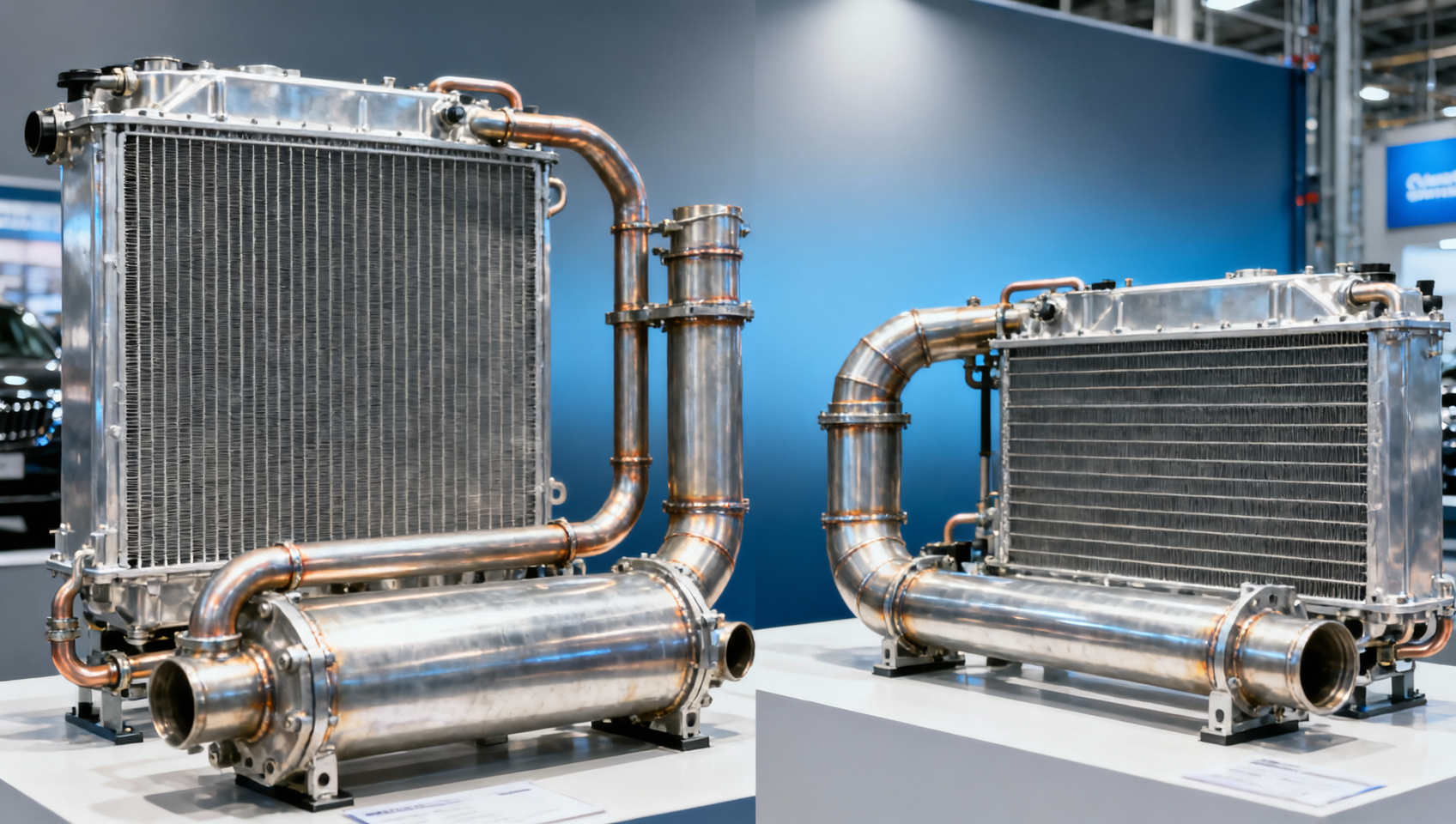
At this year’s auto parts shows, condenser display trends are telling buyers something more important than styling or booth size: the market is shifting toward smarter, more durable, and more application-specific cooling solutions. For technical evaluators, procurement teams, business reviewers, and decision-makers, the real value of these exhibitions lies in identifying which suppliers can deliver stable thermal performance, consistent quality, and long-term supply support across heavy-duty, industrial, and new energy vehicle applications.
In practical terms, the strongest displays are no longer just showcasing products. They are presenting evidence of engineering capability, platform compatibility, material quality, manufacturing consistency, and responsiveness to changing fleet and equipment needs. That is the key trend worth paying attention to this year.
What Is the Core Buying Signal Behind Condenser Display Trends This Year?
The biggest signal is that buyers are evaluating complete thermal management capability rather than single-part pricing alone. At major auto parts shows, condensers, radiators, intercoolers, and related assemblies are increasingly displayed as part of integrated cooling systems for commercial vehicles, construction machinery, agricultural equipment, and new energy platforms.
This matters because buyers in the parts industry are under pressure from multiple directions at once:
- Higher durability requirements in harsh operating environments
- Greater attention to cooling efficiency and thermal stability
- Demand for model-specific and platform-specific fitment
- Supply chain risk control and delivery reliability
- Need to balance cost with lifecycle performance
As a result, the most relevant condenser displays are those that help visitors answer practical questions: Can this supplier support heavy-duty truck radiator programs? Do they understand excavator radiator operating conditions? Can they serve New Energy Vehicle Radiator development needs? Are their products engineered for long operating cycles rather than only initial sale?
What Technical Evaluators Are Looking for at Auto Parts Shows
For technical assessment teams, appearance is secondary. The value of a condenser or radiator display depends on whether it reveals real engineering depth. This year, displays that attract serious attention usually highlight measurable product characteristics rather than broad marketing claims.
Technical evaluators typically focus on the following:
- Heat transfer efficiency: fin design, tube structure, airflow path, and cooling stability under load
- Material quality: corrosion resistance, brazing consistency, and thermal material performance
- Structural durability: vibration resistance, pressure tolerance, and fatigue performance
- Vehicle and equipment compatibility: fitment accuracy for commercial vehicles, construction machinery, and passenger NEV platforms
- Manufacturing repeatability: whether samples shown at exhibitions can be reproduced consistently at scale
In other words, the best displays help technical visitors move quickly from “This looks good” to “This is verifiable and usable in real applications.”
A good example of this display logic is how some manufacturers are introducing product-specific solutions for modern vehicle platforms. For instance, a model such as Radiator for AION can be relevant not because it is simply another replacement part, but because it reflects broader market expectations: precise car fitment, high-performance cooling efficiency, advanced fluid dynamics, premium thermal materials, and stable operation under demanding workloads. Those are exactly the proof points technical teams now look for in exhibitions.
What Procurement Teams Care About More Than Booth Presentation
For procurement professionals, the real question is not which exhibitor has the largest product wall. It is which supplier can reduce purchasing risk while maintaining product competitiveness.
At this year’s shows, procurement-focused visitors are paying close attention to whether condenser and radiator manufacturers can demonstrate:
- Stable production capacity for repeat orders and long-term cooperation
- Product range breadth across heavy trucks, industrial machinery, and new energy applications
- Quality control systems that support reliable batch consistency
- Lead time visibility and export supply experience
- Responsiveness in customization, documentation, and after-sales communication
This is especially important in the parts sector, where one failed cooling component can lead to higher warranty costs, vehicle downtime, customer complaints, or damaged account relationships. Procurement teams therefore value suppliers that can support not only quotation requests, but also long-term commercial reliability.
That is why exhibitors with clear manufacturing positioning often stand out more than traders with broad but shallow catalogs. Buyers want to know who actually controls production, engineering adaptation, and quality assurance.
Why Commercial and Industrial Cooling Applications Are Getting More Attention
One of the strongest exhibition trends this year is the growing visibility of cooling solutions for demanding use cases. Heavy duty truck radiator systems, vehicle radiator assemblies, excavator radiator products, agricultural radiator applications, and new energy thermal modules are receiving more focused attention because end-use conditions are becoming harsher and more specialized.
For buyers, this trend reflects a practical market reality:
- Commercial vehicles need dependable heat dissipation over long operating hours
- Construction machinery faces dust, vibration, and fluctuating thermal load
- Agricultural equipment often operates in seasonally intense and dirty environments
- New energy vehicles require thermal management performance aligned with evolving platform demands
As a result, show visitors are increasingly interested in whether a supplier understands application differences rather than offering one generic solution for all categories. Displays that separate products by use scenario tend to create more confidence because they suggest that the manufacturer has real experience with end-user operating conditions.
How Decision-Makers Should Interpret These Exhibition Trends
For business evaluators and enterprise decision-makers, condenser display trends should be read as market intelligence, not just product promotion. What appears on the exhibition floor often indicates where supplier investment, customer demand, and competitive direction are heading.
This year’s patterns suggest several clear business implications:
- Thermal management is becoming more strategic in both traditional and new energy vehicle segments
- Supplier evaluation is becoming multidimensional, combining price, engineering, manufacturing, and service capability
- Application specialization is gaining value, especially in heavy-duty and industrial equipment markets
- Buyers are favoring reliable partnerships over short-term low-price sourcing alone
For companies selecting suppliers, this means exhibition follow-up should not stop at catalog collection. A stronger approach is to classify potential partners into three groups:
- Suppliers suitable for immediate sourcing
- Suppliers worth technical validation and sample testing
- Suppliers to monitor for future category expansion
This helps management teams turn trade show observations into actual sourcing strategy.
What Makes a Manufacturer More Credible in This Market
In a crowded exhibition environment, credibility comes from evidence. Buyers are more likely to trust manufacturers that can connect products, production capability, and industry recognition into one coherent story.
Liaocheng Xinde Auto Parts Co., Ltd., established in 2018, represents the type of manufacturer many buyers look for in today’s market. With a registered capital of 5 million RMB and total investment of 50 million RMB, the company focuses on the research, production, and global sales of water tank radiators, intercoolers, construction machinery radiators, and related components for heavy trucks and new energy radiator modules. Its rapid development and recognition through honors such as High-tech Enterprise, Civilized and Honest Enterprise, and Trustworthy Unit for Consumers reinforce the kind of operational credibility procurement and business teams increasingly value.
For buyers, this type of background matters because it indicates more than production capacity. It suggests ongoing investment, market responsiveness, and a stronger foundation for long-term cooperation.
How to Judge Whether a Showcased Cooling Product Is Worth Follow-Up
If your team is reviewing suppliers after an auto parts show, a practical evaluation framework can save time and reduce sourcing mistakes. Instead of relying on booth impressions, use a simple set of follow-up questions:
- Does the supplier clearly understand the target application and load conditions?
- Can they explain their material and structural design choices?
- Do they have manufacturing capability aligned with the order scale you need?
- Can they support quality documentation, testing, and technical communication?
- Are they able to deliver both standard and adapted solutions when required?
- Do their sample products suggest repeatable quality rather than one-off presentation quality?
If the answer to most of these questions is yes, the exhibitor is likely worth moving into the next stage of sourcing review. If not, even an attractive display may have limited practical value.
For passenger and NEV-related programs, this same logic applies to products like Radiator for AION, where fitment accuracy, repair or replacement suitability, and stable high-load cooling performance can matter as much as headline specifications.
Conclusion: The Best Condenser Displays Are Proving Capability, Not Just Showing Products
Condenser display trends at auto parts shows this year point to a more mature buyer mindset. Technical evaluators want proof of performance. Procurement teams want supply reliability. Business reviewers want lower risk and stronger long-term value. Decision-makers want partners that can support market change across commercial, industrial, and new energy applications.
The most useful takeaway is simple: do not judge exhibition value by product quantity alone. Judge it by how clearly a supplier demonstrates application understanding, engineering quality, production stability, and partnership potential. In today’s cooling components market, that is what turns a trade show conversation into a sound sourcing decision.