



Condenser Compatibility Checks Before Installation
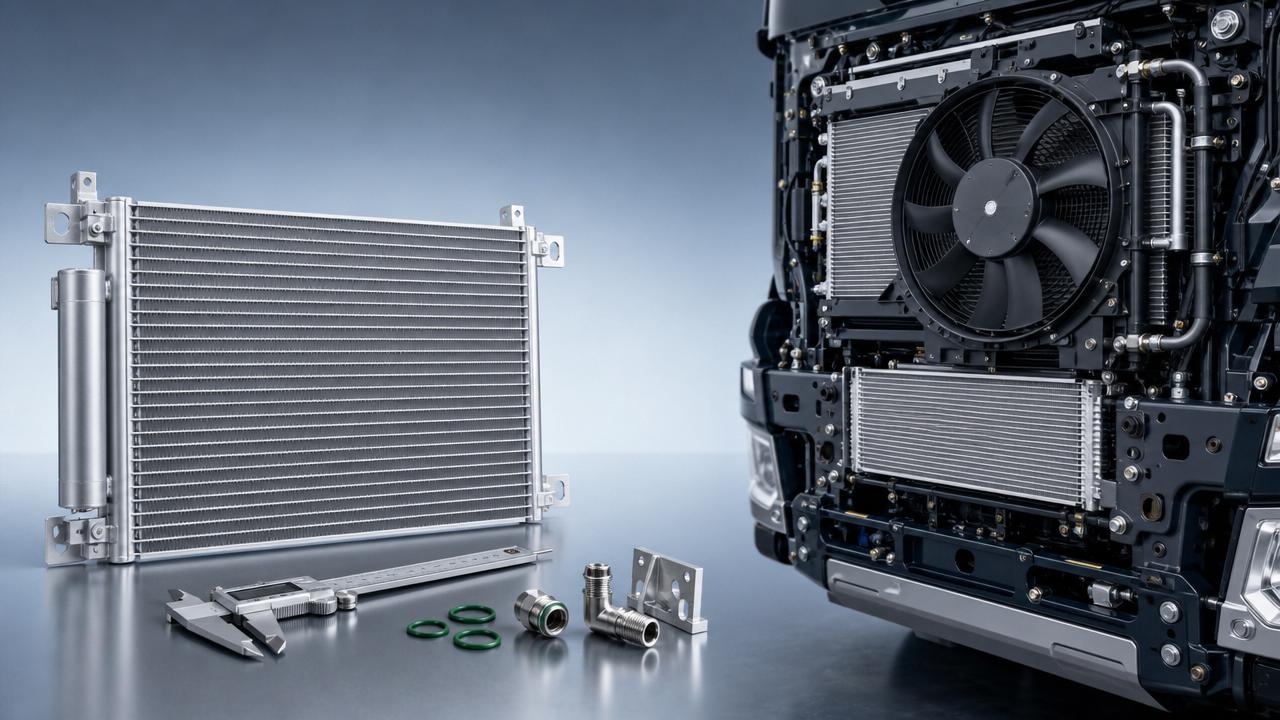
Before installing a Condenser, compatibility checks now matter more than ever across heavy trucks, machinery, and advanced cooling systems.
A small mismatch can reduce heat exchange, trigger refrigerant leakage, and create downtime that spreads across the entire operation.
As vehicles become more compact, electrified, and thermally demanding, every Condenser must match specifications before installation begins.
Compatibility Is Becoming a Core Installation Standard
The modern Condenser is no longer a simple replacement component selected only by size or visual similarity.
Cooling modules now interact with engines, compressors, electronic controls, fans, refrigerants, and increasingly dense front-end layouts.
This shift makes pre-installation verification a practical response to rising system complexity and tighter maintenance expectations.
For heavy trucks and construction machinery, the Condenser also faces vibration, dust, load changes, and long operating hours.
These conditions increase the cost of choosing a part that only appears compatible from the outside.
Trend Signals Behind Stricter Condenser Checks
Several visible changes are pushing workshops and parts suppliers toward more disciplined Condenser compatibility reviews.
Vehicle platforms are sharing fewer universal layouts, while cooling packages are being optimized for model-specific airflow.
At the same time, new energy systems demand more stable thermal performance during charging, towing, and high-load work.
A Condenser mismatch may not fail immediately, but it can slowly reduce pressure stability and compressor service life.
Why Visual Matching Is No Longer Enough
A Condenser may look similar to the original part but still differ in tube design, fin density, or connector angle.
These small differences can change airflow resistance, refrigerant flow, and installation stress on connected lines.
In older systems, minor dimensional differences were sometimes tolerated by flexible brackets or simpler pipe routes.
Today, that margin is shrinking because cooling modules are designed around precise packaging and performance targets.
For passenger applications, exact radiator and cooling module matching is also important. One example is the AUDI A3 Radiator, where fitment accuracy supports stable thermal operation.
Key Condenser Compatibility Points Before Installation
A reliable Condenser installation starts with structured checks rather than quick comparison by appearance.
Each item should be confirmed before the old unit is removed or the system is opened.
Vehicle or Equipment Specification
- Confirm model year, engine type, chassis code, and application region.
- Check whether the Condenser is for standard, heavy-duty, or upgraded cooling systems.
- Verify if the equipment uses special front-end modules or auxiliary coolers.
Mounting Position and Bracket Alignment
- Compare bracket height, hole spacing, and support tabs.
- Ensure the Condenser sits without bending or forced tightening.
- Confirm clearance from fans, radiator cores, intercoolers, and grille structures.
Pipe Connection and Sealing Design
- Check inlet and outlet positions before placing the Condenser into the frame.
- Match thread type, flange design, O-ring size, and sealing surface quality.
- Avoid forcing pipe angles, which may create hidden stress and later leakage.
Cooling Performance Checks Are Gaining More Importance
A compatible Condenser must meet both physical fitment and heat exchange requirements.
If the core is too small, pressure can rise quickly during hot weather or heavy load operation.
If airflow resistance is too high, the fan may work harder while actual cooling remains unstable.
This is especially relevant for construction machinery, long-haul trucks, and vehicles operating in dusty environments.
Before installation, compare core thickness, fin structure, tube layout, and rated application conditions.
How Compatibility Issues Affect Different Operating Links
A Condenser mismatch affects more than the air-conditioning circuit.
It can influence workshop time, fleet uptime, compressor load, and long-term parts reliability.
Drivers Behind the Move Toward Better Verification
The need for Condenser compatibility checks is being shaped by several practical pressures.
- Higher equipment utilization leaves less tolerance for repeat repairs.
- More customized vehicle platforms require accurate part identification.
- Thermal management systems are becoming more integrated and sensitive.
- Refrigerant and pressure requirements are more tightly controlled.
- End users expect longer service life from replacement components.
These drivers explain why a Condenser should be treated as a performance-related part, not only a physical replacement.
Checklist for a Safer Condenser Installation Decision
A clear checklist helps reduce missed details during busy service schedules.
It also supports better communication between parts selection, installation, and final system testing.
- Record the original part number and compare it with the replacement Condenser reference.
- Measure core size, mounting holes, and connector locations.
- Check refrigerant compatibility and expected pressure conditions.
- Inspect packaging for shipping damage, bent fins, or connector contamination.
- Confirm that seals, plugs, and protective caps are correct before opening the system.
- Verify that surrounding components allow proper airflow after installation.
- Pressure test and leak test after the Condenser is installed.
What Reliable Parts Production Contributes to Compatibility
Compatibility also depends on manufacturing consistency, dimensional control, and stable material quality.
Liaocheng Xinde Auto Parts Co., Ltd. focuses on radiators, intercoolers, heavy truck cooling components, and new energy radiator modules.
Established in 2018, the company has developed rapidly through research, production, and global sales of thermal management parts.
Its experience with heavy-duty applications supports practical understanding of Condenser fitment, cooling load, and durability expectations.
Honors such as High-tech Enterprise and Trustworthy Unit for Consumers reflect continued attention to quality and dependable service.
Future Judgement: Compatibility Will Become More Data-Based
The next stage of Condenser selection will likely rely more on technical data than visual matching.
Part numbers, vehicle databases, pressure ratings, and digital fitment records will reduce uncertainty before installation.
For demanding machinery, this approach can help predict whether a Condenser supports real operating heat loads.
Action Steps Before the Next Installation
Before fitting a new Condenser, gather the original specifications and inspect every connection point under good lighting.
Do not rely only on similar shape, matching length, or quick catalog assumptions.
Confirm fitment, refrigerant requirements, mounting stability, airflow path, and pressure test results before returning equipment to service.
For broader cooling system decisions, compare related components such as radiators, intercoolers, fans, and the Condenser as one thermal package.
This practical approach supports safer operation, fewer leaks, smoother maintenance, and longer service life across demanding applications.