



Auto Radiator Price Gaps Often Come Down to These Details
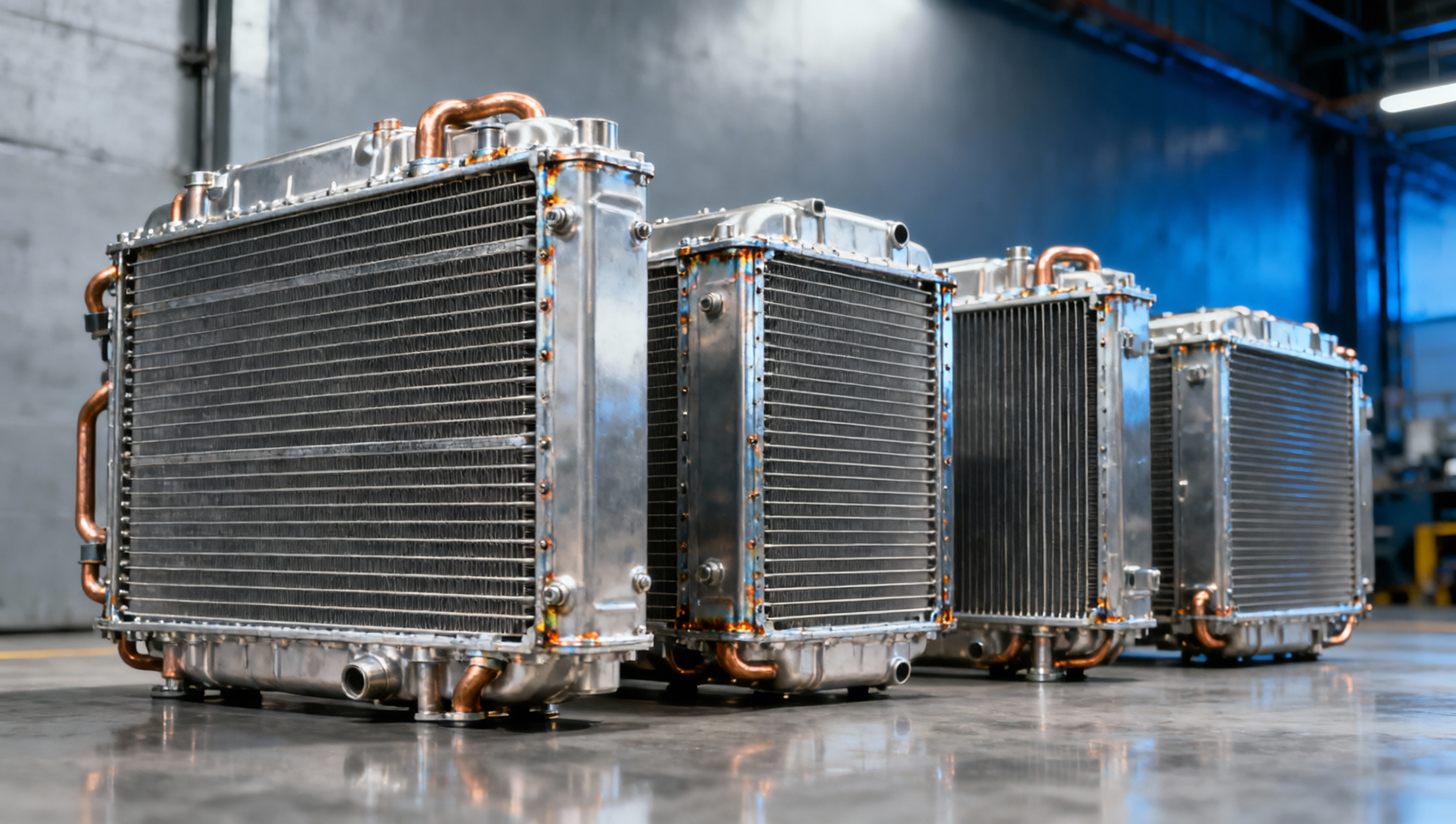
Why can two auto radiator options look similar yet differ greatly in price? In most cases, the gap lies in details such as radiator core materials, welding quality, thermal performance, and the integration level of each radiator module. For technical evaluators, buyers, and project decision-makers, understanding these factors is essential to balancing cost, durability, and long-term operational safety.
In practice, the biggest reason for auto radiator price differences is not appearance but performance reliability over time. For technical assessment teams, purchasing managers, quality supervisors, and project leaders, the real question is not “Which radiator is cheaper?” but “Which radiator delivers stable cooling, lower failure risk, and predictable lifecycle cost?” A lower upfront price may hide compromises in material thickness, brazing consistency, corrosion resistance, or testing standards. Those details directly affect vehicle uptime, warranty exposure, and operational safety.
What Buyers Are Really Paying For in Auto Radiator Pricing
When comparing quotations, many decision-makers first focus on dimensions, fitment, and unit price. But auto radiator cost is usually driven by a deeper set of manufacturing and engineering variables. These include:
- Core material grade and aluminum purity
- Tube and fin design efficiency
- Brazing or welding process stability
- Pressure resistance and leakage control
- Corrosion resistance in real operating environments
- Module integration complexity
- Quality inspection standards and traceability
For enterprise buyers, these factors matter because they influence total cost of ownership. A radiator that costs less at procurement stage may later create overheating risks, unplanned maintenance, customer complaints, or early replacement. In fleet, heavy truck, construction machinery, and new energy cooling applications, such consequences can far exceed the initial price gap.
Core Material Quality Often Explains the First Major Price Gap
One of the most common reasons for price variation is the radiator core itself. Two products may both be labeled aluminum radiators, but the actual material quality can differ significantly. Higher-grade aluminum generally offers better thermal conductivity, stronger corrosion resistance, and more stable structural behavior under temperature cycling.
Low-cost options may reduce material cost by using thinner tubes, lower-grade alloys, or less optimized fin structures. That can make the radiator lighter and cheaper, but it may also reduce cooling efficiency and shorten service life, especially in demanding operating conditions.
Technical evaluators should pay attention to:
- Tube wall thickness consistency
- Fin density and airflow design
- Resistance to vibration and thermal expansion
- Material certification and batch consistency
For applications where thermal stability is critical, radiator material selection should be judged not only by specification sheets but also by process capability and long-term field performance.
Why Brazing and Welding Quality Matter More Than Many Buyers Expect
Radiator failure often starts at the joints. Even if the core material is acceptable, poor brazing or welding quality can lead to micro-leaks, reduced pressure resistance, and premature failure in service. This is especially important for automotive cooling systems exposed to temperature fluctuation, pressure cycling, vibration, and harsh road conditions.
Higher-priced radiators may reflect better process control during brazing, cleaner manufacturing environments, tighter temperature management, and more reliable joining strength. These are not cosmetic advantages; they are directly linked to service reliability.
Quality control teams should evaluate:
- Joint uniformity and visible brazing consistency
- Pressure test procedures
- Leak detection methods
- Production line stability and defect rate control
- Evidence of fatigue and durability testing
If a supplier cannot clearly explain its joining process or inspection standards, a lower unit price may signal elevated operational risk.
Thermal Performance Is the Detail That Most Directly Affects Real-World Value
For most buyers, thermal performance should be one of the top evaluation criteria. An auto radiator is not simply a replacement part; it is a thermal management component responsible for maintaining engine or system temperature within safe limits. If cooling capacity is marginal, the effects can include reduced efficiency, overheating, component stress, and shorter system life.
This is where apparently similar radiators can produce very different results in actual use. Thermal performance depends on the balance of several design factors:
- Effective heat exchange area
- Tube and fin geometry
- Coolant flow distribution
- Airflow compatibility
- Operating temperature range
For example, a brazing radiator designed for vehicle thermal stability should not only fit the vehicle model but also maintain consistent cooling under urban driving, high ambient temperature, stop-and-go traffic, and higher engine load conditions. A product such as Radiator for Lynk, model 2069525700, used in automotive cooling systems for Link 06 / binyue, reflects how material choice, brazed structure, and thermal engineering are expected to work together rather than be judged by outward similarity alone.
Integration Level and Fitment Accuracy Also Change the Price
Another often overlooked factor is how integrated the radiator module is and how accurately it matches the intended application. A radiator is rarely evaluated in isolation in professional procurement. Decision-makers also consider installation compatibility, packaging dimensions, connection accuracy, and interaction with surrounding cooling system components.
More advanced radiator modules may include tighter dimensional tolerances, better assembly compatibility, and fewer installation adjustments on site. These details improve project execution efficiency and reduce hidden labor costs. In OEM, aftermarket, or fleet maintenance settings, poor fitment can cause delays, rework, or even system performance issues after installation.
Project managers and engineering leaders should therefore assess:
- Dimensional consistency across batches
- Vehicle or equipment application accuracy
- Ease of installation and replacement
- Compatibility with existing thermal management architecture
- Packaging protection during international transport
Even a single-item radiator with a defined size such as 83X14X58 cm can vary in practical installation value depending on manufacturing precision and supply consistency.
Testing, Warranty, and Supplier Capability Should Be Part of the Price Analysis
Price should never be separated from supplier capability. A manufacturer with stronger R&D, production discipline, and export experience typically builds more process stability into the product. That may raise the initial price, but it often reduces uncertainty for commercial buyers.
For B2B purchasers, a credible supplier should be able to support evaluation in the following areas:
- Product traceability and quality documentation
- Pressure, leak, and durability test records
- Warranty terms and claims response process
- Mass production consistency
- Engineering communication speed
- Customization or application support capability
Liaocheng Xinde Auto Parts Co., Ltd., established in 2018, has focused on research, production, and global sales of water tank radiators, intercoolers, construction machinery radiators, heavy truck cooling components, and new energy radiator modules. For buyers, this kind of manufacturing specialization matters because price differences are often tied to process maturity, engineering depth, and the ability to maintain quality across volume production.
How Technical and Commercial Teams Can Judge Whether a Higher Price Is Justified
For cross-functional evaluation teams, the most practical approach is to compare radiator options through a value-based checklist rather than by quotation alone. A higher-priced radiator may be justified when it offers:
- Better thermal efficiency under demanding conditions
- Longer service life and lower failure probability
- Higher consistency across production batches
- Lower installation and maintenance risk
- Better warranty protection and after-sales support
- Stronger evidence of testing and quality assurance
Commercial decision-makers should also estimate the cost of failure. If radiator issues can trigger downtime, equipment damage, warranty claims, or safety concerns, then a moderate procurement saving may not be worth the long-term exposure. This is particularly true in heavy-duty or project-based environments where reliability affects both operations and reputation.
A Practical Way to Compare Auto Radiator Quotes
When reviewing supplier offers, ask for more than a product photo and basic dimensions. A stronger comparison process includes:
- Confirm exact application and fitment data
- Request material and manufacturing process information
- Review brazing or welding quality standards
- Check pressure, leak, and durability test methods
- Compare warranty terms and service commitments
- Evaluate supplier production capability and consistency
- Estimate lifecycle cost, not just purchase price
If the radiator is intended for demanding driving conditions, buyers should prioritize proven thermal stability, structural reliability, and quality control evidence. In many cases, that is where the real value sits.
In summary, auto radiator price gaps usually come down to technical and manufacturing details that directly affect reliability, cooling performance, fitment accuracy, and lifecycle cost. For technical evaluators, procurement teams, quality managers, and business decision-makers, the smartest choice is not automatically the lowest-priced option or the highest-priced one, but the radiator that delivers verified performance for the intended application. When comparing products, focus on material quality, joining process, thermal efficiency, testing standards, and supplier capability. Those are the details that turn a price difference into either a justified investment or an avoidable risk.