



Radiator Module Updates Seen at Recent Exhibitions in 2026
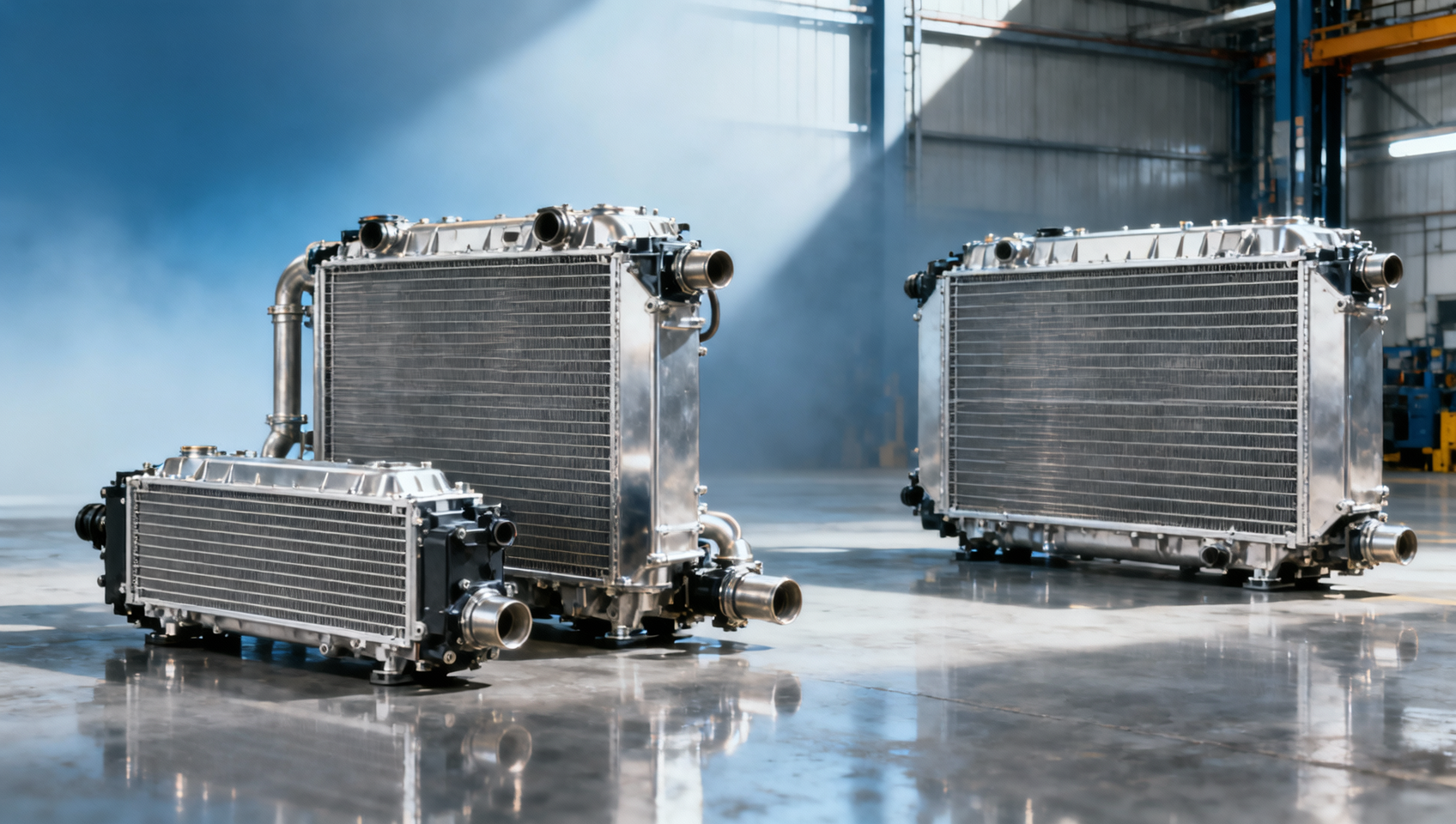
Recent 2026 exhibitions have highlighted notable advances in radiator module design, from stronger radiator core performance to smarter auto radiator integration for heavy trucks, construction machinery, and new energy applications. For technical reviewers, quality managers, project leaders, and decision-makers, these updates signal new opportunities to improve cooling efficiency, reliability, and sourcing confidence in a fast-evolving global parts market.
Across the parts industry, radiator module updates are no longer limited to incremental material changes. Buyers are now comparing thermal efficiency, packaging flexibility, vibration resistance, corrosion performance, sensor integration, and lifecycle stability across multiple vehicle and equipment platforms. This is especially relevant when procurement teams must balance cost targets with field reliability over 12 to 36 months of operation.
For companies evaluating long-term supply partners, exhibition trends in 2026 also provide a useful benchmark for manufacturing capability. Liaocheng Xinde Auto Parts Co., Ltd., established in 2018 with a registered capital of 5 million RMB and a total investment of 50 million RMB, operates in the research, production, and global sales of water tank radiators, intercoolers, construction machinery radiators, and new energy radiator modules. Its rapid development and recognition as a high-tech and trustworthy enterprise reflect the direction many serious B2B buyers now prioritize: scalable production, application-specific engineering, and dependable quality control.
What 2026 Exhibitions Revealed About Radiator Module Development
One of the clearest messages from recent exhibitions is that radiator modules are becoming more application-specific. Heavy trucks, construction machinery, and new energy platforms no longer accept a one-size-fits-all cooling package. Instead, engineers are seeking modules tuned for higher heat loads, tighter installation spaces, and more demanding duty cycles, often with temperature control targets within a narrower operating band.
In practical terms, exhibitors emphasized 3 major upgrade paths: stronger radiator core structure, improved airflow and coolant flow coordination, and more integrated module architecture. These changes matter because many field failures do not begin with catastrophic leaks. They start with gradual heat rejection loss, vibration fatigue, or mounting stress that appears after 6 to 18 months in real operating conditions.
Technical reviewers also paid close attention to brazing consistency, fin density selection, and header tank durability. In many working environments, especially for construction machinery, operating temperatures can fluctuate sharply within a single shift. A radiator module that performs well at steady-state laboratory conditions may still underperform in dust, stop-start loads, or prolonged idling under high ambient temperatures above 35°C.
Another visible trend was smarter system integration. Rather than sourcing a radiator as an isolated part, OEM and aftermarket buyers increasingly evaluate the total module: radiator, intercooler, fan shroud, mounting points, and compatibility with sensors or thermal management logic. This reduces installation errors, shortens assembly time by 10% to 20% in some projects, and supports more predictable maintenance planning.
Key technical themes seen on the exhibition floor
- Higher cooling efficiency under variable load, especially for engines and hybrid or electric systems with intermittent thermal spikes.
- Improved corrosion resistance for cross-border supply markets where coolant chemistry and climate conditions vary significantly.
- More compact module layouts for platforms with limited front-end space or added battery-related thermal components.
- Better structural durability for vibration-heavy applications such as mining vehicles, loaders, and long-haul commercial fleets.
These updates are particularly relevant to procurement and project teams because the value of a radiator module is not measured only by initial purchase price. It is measured by the total cost of heat management failure, including downtime, service labor, coolant loss, and reputational damage when the end equipment misses uptime targets.
Why These Updates Matter for Heavy Trucks, Construction Machinery, and New Energy Platforms
Different application sectors put very different stresses on a radiator module. Heavy trucks often operate for 8 to 14 hours per day under long-distance load, where stable engine cooling and resistance to road vibration are critical. Construction machinery faces harsher contamination, stronger shock loads, and lower tolerance for unplanned stoppage on project sites. New energy systems add a different challenge: more precise thermal management across motors, power electronics, and batteries.
At 2026 exhibitions, many suppliers focused on matching radiator architecture to application duty. This matters because an under-specified module may still pass initial inspection but fail to maintain thermal balance under real seasonal peaks. For project managers, that risk can delay commissioning, trigger rework, and disrupt delivery schedules by 2 to 6 weeks depending on parts availability and installation complexity.
For quality and safety personnel, radiator upgrades also reduce risk concentration in two areas: temperature-related component degradation and fluid containment failure. If thermal management is unstable, adjacent components may experience accelerated wear. If a module lacks sufficient structural integrity, leak points can emerge around joints, tanks, or connections after repeated thermal cycling.
The following comparison helps decision-makers understand how selection priorities differ by equipment category and operating environment.
The table shows that radiator module procurement should be tied directly to usage profile. A capable supplier must understand whether the priority is extended durability, field maintainability, or integrated thermal control. This is where a specialist manufacturer with cross-segment experience can offer stronger engineering alignment than a generic catalog-only source.
Operational questions buyers should ask
Load and environment
Define whether the equipment runs in high dust, coastal humidity, low-speed congestion, or long-haul high-load service. These variables influence fin design, material treatment, and test priorities.
Maintenance window
If service intervals are every 250 to 500 operating hours, easier cleaning access and predictable module wear become valuable. If the equipment is expected to run with minimal intervention, stronger durability thresholds should dominate selection.
Platform integration
Check whether the radiator module must coordinate with intercoolers, fan systems, battery loops, or existing mounting geometry. Poor integration can create hidden costs even when unit pricing looks attractive.
How Technical and Commercial Teams Should Evaluate Supplier Capability
Exhibition displays can show design intent, but sourcing decisions require deeper validation. For technical evaluators, the first question is whether the supplier can consistently manufacture to the same standard shown on display. For commercial teams, the key issue is whether that supplier can support delivery, communication, documentation, and change control across repeated orders over 1 to 3 years.
Liaocheng Xinde Auto Parts Co., Ltd. represents the type of manufacturer many global buyers now screen for: a focused producer with development capability in water tank radiators, intercoolers, construction machinery radiators, and new energy radiator modules. Since its establishment in 2018, the company has expanded rapidly and earned provincial and municipal honors linked to technology, integrity, and consumer trust, which matters when procurement teams assess long-term cooperation risk.
A practical evaluation should combine 4 dimensions: product engineering, process control, application understanding, and business responsiveness. Technical excellence alone is not enough if drawing confirmation takes too long or sample feedback cycles are weak. Likewise, fast quotation alone is not enough if thermal performance verification is shallow.
The matrix below can help project leaders and sourcing managers create a more disciplined comparison when shortlisting radiator module suppliers in 2026.
The strongest sourcing decisions usually result from cross-functional review. Engineering checks fit and performance. Quality checks process stability. Purchasing checks lead time and risk. Management checks total value. When these 4 perspectives align, supplier onboarding becomes more reliable and change requests become easier to control.
A practical 5-step supplier screening flow
- Confirm application details, including load profile, available space, and operating environment.
- Review drawings, OE references, and target service life expectations.
- Request sample validation and inspect dimensional and sealing consistency.
- Evaluate communication speed, documentation clarity, and corrective action process.
- Approve pilot order only after technical and commercial checkpoints are both passed.
Product-Level Example: Passenger and Commercial Vehicle Cooling Requirements
Although 2026 exhibitions heavily featured heavy-duty and new energy systems, passenger and commercial vehicle applications remain a major part of radiator demand. Buyers looking for platform-compatible replacement or upgrade solutions often require OE reference clarity, standard compliance, and dependable thermal management under mixed driving conditions such as urban traffic, highway load, and seasonal temperature changes.
A relevant example is Radiator for Benz, designed for models including W124 E-Class, W206 C-Class, and W242 Electric Drive series, with application coverage for Mercedes-Benz passenger cars and commercial vehicles. Its listed OE reference is 2025005203 / 202 500 52 03, warranty period is 1 year, certification includes CE, and the stated core functions focus on engine cooling and thermal management.
For evaluators, the importance of this type of product detail lies in compatibility and expectations management. If a radiator is specified as universal in configuration and sized at 20X15X10 cm in the listing, the next step is to verify exact fitment, hose alignment, mounting conditions, and cooling demand against the target vehicle platform. Product data should always be checked against the real installation environment before ordering in volume.
The stated advantages, such as meeting or exceeding OEM specifications, superior cooling efficiency, and optimal thermal management under demanding driving conditions, should be reviewed together with sample inspection and application testing. This disciplined approach helps procurement teams avoid a common mistake: accepting broad marketing language without validating platform-specific performance.
What product reviewers should verify before approval
- OE number consistency and vehicle model applicability across all purchasing documents.
- Mounting compatibility, connector layout, and dimensional tolerance in the actual engine bay or installation zone.
- Cooling performance under low-speed and high-load scenarios, not just nominal operating conditions.
- Warranty terms, packaging protection, and incoming inspection criteria for batch receiving.
In the parts business, even a well-specified radiator can create downstream issues if application confirmation is weak. That is why experienced buyers pair catalog review with sample checks, especially when supporting mixed fleets or export markets where model-year differences can affect installation.
Common Procurement Risks, Quality Control Priorities, and Implementation Advice
As radiator modules become more advanced, procurement risk shifts from simple price comparison to execution discipline. One recurring risk is selecting a module based only on nominal dimensions while ignoring vibration exposure, coolant compatibility, and airflow path design. Another is assuming that a supplier experienced in one segment, such as passenger vehicles, can automatically deliver the same reliability in heavy trucks or construction equipment.
For quality managers, incoming inspection should focus on 6 practical checkpoints: appearance and fin damage, dimensional conformity, connection integrity, sealing quality, packaging protection, and document consistency. If pilot batches show even small variation in these areas, the risk of field issues rises quickly once shipment volume scales from dozens of units to hundreds.
Implementation planning should also be realistic. A typical project may require 3 stages: technical confirmation, sample validation, and batch release. Depending on complexity, sample preparation may take 7 to 15 days, while pilot review and adjustment can add another 1 to 3 weeks. Teams that define these gates early usually reduce emergency changes later in the project timeline.
The checklist below summarizes frequent sourcing errors and corresponding control actions that help technical and business teams make better decisions.
The most important takeaway is that radiator module quality is created before shipment, not after installation. Strong purchasing outcomes depend on disciplined specification, clear sample approval, and repeatable inspection standards. When these controls are in place, buyers improve both sourcing confidence and field reliability.
FAQ for project teams and sourcing managers
How do I choose between a standard radiator and an integrated module?
If the project has tight packaging, multiple heat sources, or a target to reduce assembly complexity, an integrated module is usually the better fit. If replacement simplicity and low platform variation are the priority, a standard radiator may still be sufficient.
What lead time is typical for sample and batch supply?
For many parts projects, sample lead time often falls within 7 to 15 days, while batch timing depends on order volume, tooling status, and packaging requirements. Complex module projects may need additional validation time.
Which metrics should quality teams monitor first?
Start with dimensional accuracy, sealing integrity, visible fin condition, connection consistency, and packaging protection. These are the areas most likely to affect immediate installation success and early field performance.
Why do exhibition trends matter to commercial decision-makers?
Because they show where supplier capability is moving. In 2026, the shift toward higher-efficiency, better-integrated radiator modules suggests that future competitiveness will depend on thermal performance, durability, and engineering support rather than basic commodity pricing alone.
Choosing the Right Partner for Future Cooling Projects
The radiator module updates seen at recent 2026 exhibitions point to a clear direction for the parts industry: stronger cooling performance, smarter system integration, and tighter alignment between application demand and product design. For technical assessors, this means deeper evaluation of thermal and structural suitability. For business leaders, it means selecting suppliers that can support both present cost goals and future platform requirements.
Manufacturers with focused experience in radiators, intercoolers, construction machinery cooling products, and new energy radiator modules are better positioned to support these needs. A company such as Liaocheng Xinde Auto Parts Co., Ltd. brings relevance through its industry specialization, production investment, and steady development since 2018, which can help buyers seeking dependable cooperation in a competitive global supply environment.
Whether your priority is radiator core durability, thermal management optimization, application matching, or supplier screening, the most effective path is a structured review that combines technical verification with commercial discipline. That approach lowers sourcing risk, improves uptime, and supports more confident purchasing decisions across heavy trucks, construction machinery, passenger vehicles, and new energy projects.
If you are evaluating radiator modules or related cooling components for upcoming programs, now is the right time to compare options, review specifications in detail, and discuss application needs with an experienced manufacturer. Contact us today to get a tailored solution, request product details, or explore more cooling system options for your next project.