



Why Radiator Core for New Energy Vehicles Needs Different Design
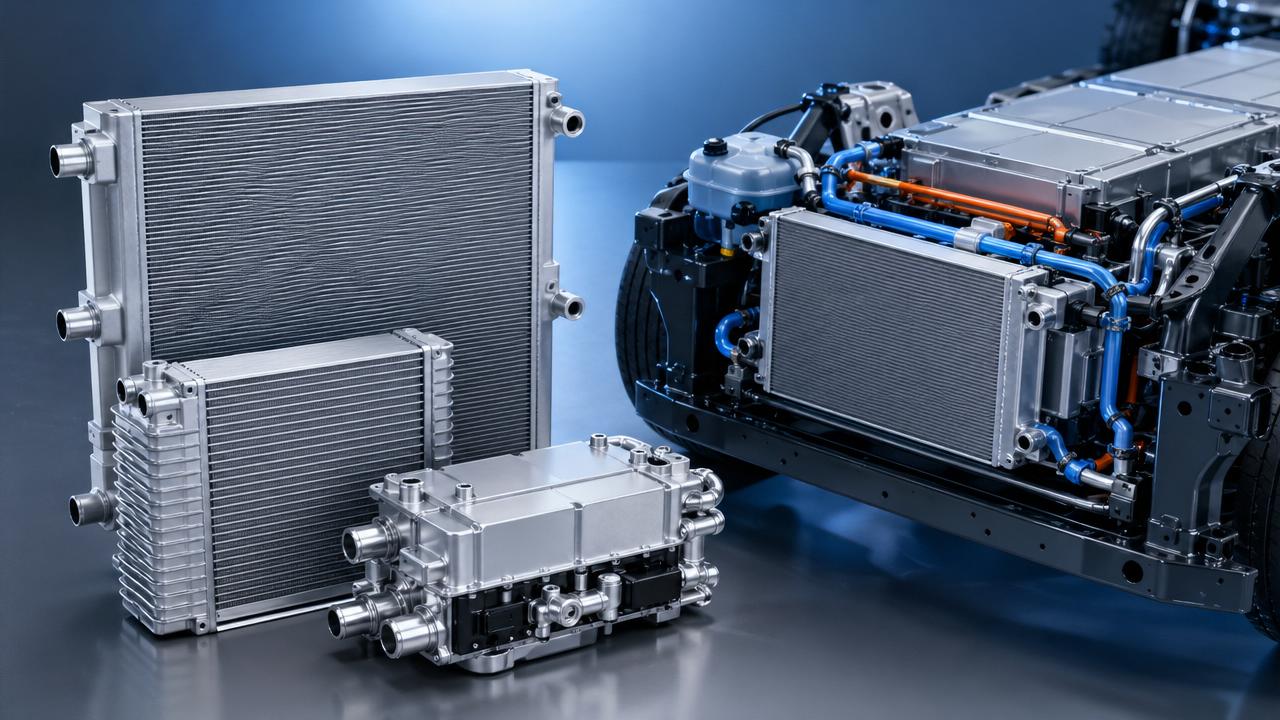
For technical evaluators, designing a radiator core for new energy vehicles is no longer a simple extension of conventional thermal systems. Different battery layouts, inverter heat loads, space constraints, and lightweight requirements demand a more specialized approach. Understanding these design differences is essential for selecting reliable cooling solutions that improve efficiency, durability, and overall vehicle performance.
Understanding the Shift in Thermal Demands
The radiator core for new energy vehicles serves a fundamentally different mission than the cooling core used in traditional internal combustion platforms. In a diesel or gasoline vehicle, the cooling system mainly manages high-temperature engine coolant under relatively stable thermal patterns. In contrast, new energy vehicles must control several heat sources at once, including batteries, electric motors, inverters, converters, onboard chargers, and sometimes integrated thermal management modules. Each component has its own preferred operating temperature window, and these windows are often narrower than in conventional systems.
For technical assessment teams, this means the radiator core can no longer be evaluated only by frontal area, coolant flow, or peak heat rejection at high engine load. The design must be judged by how precisely it supports temperature stability, how well it works under transient cycles, and how effectively it integrates with pumps, valves, sensors, and control logic. The radiator core for new energy vehicles is part of a coordinated thermal architecture rather than a standalone heat exchanger.
This shift explains why specialized core geometry, tube structure, fin density, material selection, and low-pressure-drop design are receiving more attention across the auto parts industry. Suppliers with established heat exchanger expertise, such as Liaocheng Xinde Auto Parts Co., Ltd., have expanded from conventional water tank radiators and heavy truck cooling products into new energy radiator modules because the market increasingly requires application-specific engineering rather than simple product carryover.
Why conventional assumptions no longer work
A conventional radiator core is usually optimized for high thermal rejection from an engine with a large coolant temperature gradient. New energy systems often operate with lower temperature differentials, which reduces the natural heat transfer advantage. As a result, the radiator core for new energy vehicles must compensate through more refined airflow management, improved fin efficiency, and tighter control over coolant-side distribution.
Another challenge is packaging. Battery-electric and hybrid platforms often place thermal components in front-end modules shared with condensers, coolers, shutters, crash structures, and electronic devices. Limited space means evaluators must consider thickness, stacking order, vibration resistance, and manufacturability from the earliest design stage.
Key distinction at a glance
Industry Background and Why Evaluators Care
The rapid growth of electrified mobility has raised the technical standard for cooling components. Thermal runaway prevention, battery life protection, fast charging support, and power electronics reliability all depend on accurate heat management. This is why the radiator core for new energy vehicles has moved from being a secondary component to a strategic subsystem in vehicle development and supplier validation.
For evaluators in the parts sector, the main issue is not simply whether a supplier can manufacture aluminum heat exchangers. The real issue is whether the supplier understands the thermal logic of electric platforms, including low-conductivity coolant compatibility, modular integration, corrosion resistance, pulse pressure durability, and the interaction between airflow and control strategy. In practical evaluation work, a design that looks acceptable on paper may still fail when exposed to charge-discharge cycling, stop-and-go urban operation, or hot climate fast-charging events.
This industry context favors manufacturers that combine production capacity with application-driven engineering. Liaocheng Xinde Auto Parts Co., Ltd., established in 2018, has built its position through research, production, and global sales of radiators, intercoolers, construction machinery radiators, and heavy truck and new energy radiator modules. For technical evaluators, such a background matters because it indicates familiarity with durability, thermal load diversity, and customized cooling architecture.
Main drivers behind design differentiation
- Higher sensitivity of batteries and power electronics to temperature fluctuation
- Need for fast heat removal during charging and high-power discharge
- Lower allowable system weight for range efficiency
- Tighter front-end and underbody packaging constraints
- Demand for long service life under vibration, corrosion, and cyclic pressure
Because of these factors, the radiator core for new energy vehicles should be assessed as a lifecycle-critical component. A suboptimal design may not show immediate failure, but it can cause reduced battery efficiency, power derating, accelerated coolant degradation, or poor thermal uniformity over time.
What Makes the Core Design Different in Practice
At the practical engineering level, the most important design difference is that heat rejection must be optimized at lower coolant temperatures and often under dynamic operating profiles. This requires more attention to tube microstructure, fin louver geometry, manifold distribution, and brazing consistency. Even small design choices can affect local temperature uniformity and system pressure drop.
The radiator core for new energy vehicles also tends to be more integrated with complete thermal modules. It may work alongside chillers, condensers, plate heat exchangers, electric pumps, and smart valves. Therefore, core design is not only about standalone heat transfer coefficient. It must also support balanced coolant routing, acceptable fan power demand, and predictable response in a controlled thermal circuit.
Lightweighting is another practical difference. In electric vehicles, every kilogram influences energy consumption and range. Designers often pursue thinner walls, optimized header configuration, and high-efficiency fin structures. However, reducing mass cannot come at the expense of fatigue resistance or leak integrity, which is why production quality and validation testing remain central to technical evaluation.
Core design priorities
1. Thermal efficiency at lower temperature difference
A lower delta-T means the core must extract more value from available airflow and coolant contact area. Advanced fin geometry and well-balanced flow distribution become critical.
2. Pressure drop control
Electric pumps consume power directly from the vehicle energy system. Excessive coolant-side or air-side pressure drop increases energy use and can reduce total thermal efficiency.
3. Structural durability
New energy vehicles still face road shock, vibration, thermal cycling, and corrosion. The radiator core must maintain sealing performance and dimensional stability under these conditions.
4. Integration readiness
The best radiator core for new energy vehicles is compatible with the full module layout, electrical insulation requirements where applicable, mounting strategy, and service expectations.
Application Value Across Vehicle and Component Types
Not all electrified platforms need the same cooling architecture. Battery-electric passenger cars, hybrid commercial vehicles, electric buses, and heavy-duty trucks each present distinct thermal conditions. Technical evaluators should classify requirements before comparing core designs, because a configuration optimized for a compact city EV may not work for high-duty logistics equipment.
In commercial transport, radiator performance is especially important because vehicles may operate continuously under load, in dusty environments, or in regions with high ambient temperatures. Here, the radiator core for new energy vehicles must balance anti-clogging airflow behavior, mechanical strength, and serviceability. In passenger applications, compactness and NVH-related airflow design may carry more weight.
A useful reference point for evaluators is to compare new energy requirements with proven heavy-duty radiator experience. For instance, a product such as XD045 MAN F2000 19.603, associated with TRUCK application and a 1065*688*48 size format, reflects how dimensional discipline, load-oriented design logic, and application matching remain essential even when thermal systems evolve toward electrification.
Typical classification by application focus
Evaluation value for engineering teams
- Improves thermal stability of high-value components
- Supports battery life and charging performance
- Reduces risk of power derating in demanding cycles
- Helps optimize energy consumption of cooling auxiliaries
- Strengthens long-term durability and warranty confidence
Practical Evaluation Criteria for Supplier and Product Review
When reviewing a radiator core for new energy vehicles, technical evaluators should move beyond nominal cooling capacity and ask how the design performs in the target system. Test data should include thermal performance under realistic flow ranges, air-side resistance, cyclic durability, salt spray or corrosion behavior, and consistency of core manufacturing quality. Variability between samples can be as important as peak performance from one prototype.
It is also useful to verify whether the supplier understands application boundaries. A capable supplier should discuss coolant compatibility, joining process control, leak prevention, tube burst strength, and thermal fatigue margin. In the current market, strong engineering communication is a practical sign that the radiator core was developed for system reliability rather than only catalog expansion.
For projects involving commercial vehicles or crossover platforms, evaluators may benefit from looking at legacy heavy-duty product experience, including references connected with models such as F2000 or 81061016421, while still confirming that the final design logic fits electrified requirements. Cross-domain experience is valuable only when translated into the correct new energy thermal targets.
Recommended checklist
Design review
- Tube and fin geometry matched to target heat load
- Acceptable coolant and air-side pressure drop
- Packaging compatibility with module layout
Validation review
- Thermal cycling and vibration test results
- Leak integrity after durability exposure
- Corrosion resistance in expected operating environment
Manufacturing review
- Brazing quality consistency
- Dimensional control and traceability
- Scalability for stable volume production
Conclusion and Next-Step Perspective
The reason a radiator core for new energy vehicles needs different design is clear: the thermal task itself has changed. Electrified platforms demand precise temperature management, low energy loss, compact integration, and long-term reliability across batteries, power electronics, and drive systems. These demands cannot be met by simply adapting a conventional engine radiator without deeper engineering revision.
For technical evaluators, the best approach is to assess the radiator core as part of an integrated thermal system. That means checking not only heat rejection, but also flow efficiency, packaging fit, durability, manufacturing stability, and real application alignment. A well-designed radiator core for new energy vehicles contributes directly to efficiency, safety, lifecycle cost control, and vehicle performance.
As the market continues to mature, working with manufacturers that combine heat exchanger experience, production capability, and application-focused development will become increasingly important. Careful evaluation today helps ensure that tomorrow’s electric and hybrid platforms achieve the cooling reliability their operating demands require.