



Heavy Duty Truck Radiator Samples at Exhibitions What Stands Out?
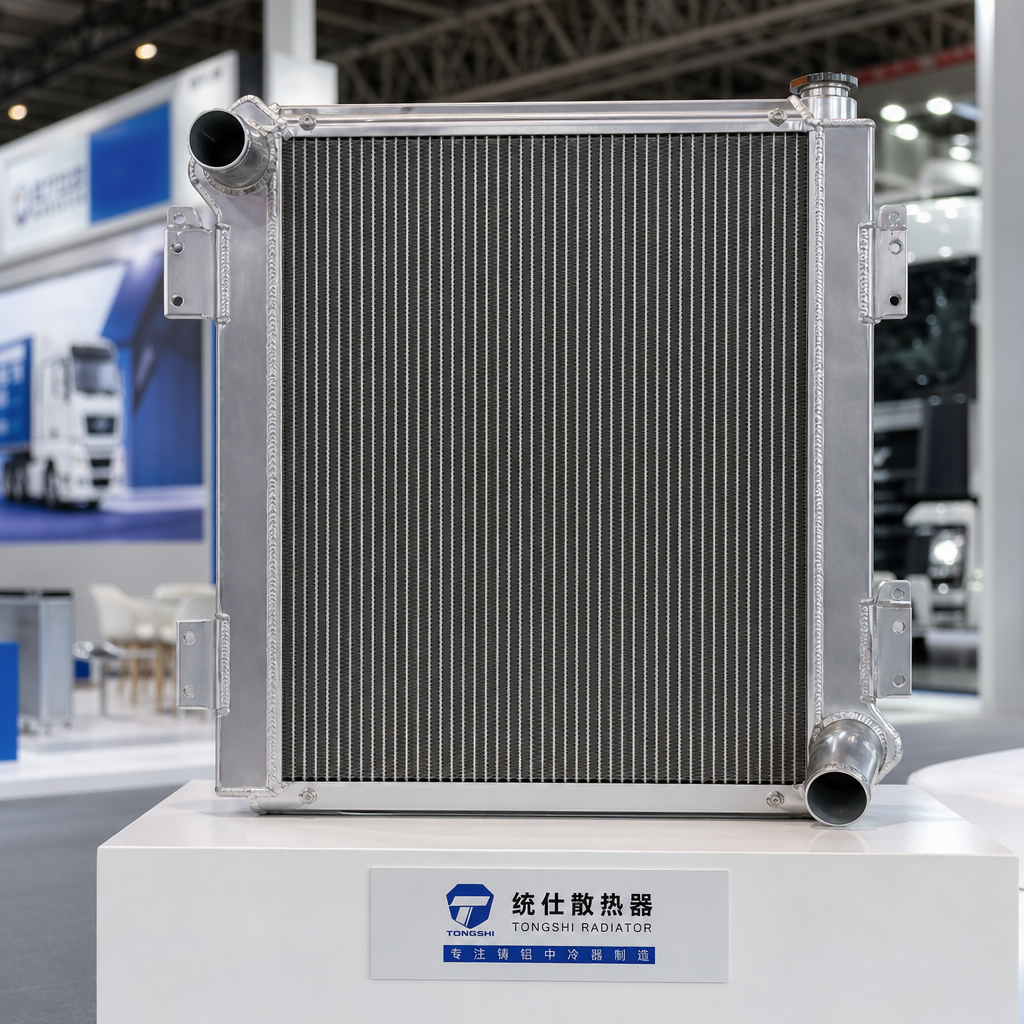
At industry exhibitions, a Heavy duty truck radiator sample must do more than look robust—it should reveal real manufacturing strength, thermal efficiency, and application range. From Vehicle radiator and Condenser solutions to Agriculturaal radiator, Excavator radiator, and New Energy Vehicle Radiator modules, buyers and technical evaluators focus on durability, finish quality, and performance details that signal a reliable long-term supplier.
What makes a heavy duty truck radiator sample stand out on the exhibition floor?
A strong exhibition sample is not judged by appearance alone. For technical evaluators, the first 3 checks usually include brazing consistency, fin density uniformity, and tank-to-core assembly precision. For procurement teams, the next 2 concerns are supply stability and whether the radiator design can match multiple platforms without repeated tooling cost. For business decision-makers, the broader question is whether the supplier can support long-term product expansion across heavy trucks, machinery, and new energy cooling systems.
In the parts industry, a heavy duty truck radiator sample should communicate application logic within 5–10 minutes of discussion. Buyers want to see whether the unit is designed for high-load logistics vehicles, construction machinery, or mixed fleets operating in hot climates, dusty roads, or stop-start duty cycles. A sample that clearly shows material quality, weld integrity, and serviceability reduces evaluation time and improves confidence during the first round of supplier screening.
Liaocheng Xinde Auto Parts Co., Ltd., established in 2018 with a registered capital of 5 million RMB and a total investment of 50 million RMB, presents a manufacturing profile that matters in exhibition discussions. The company focuses on water tank radiators, intercoolers, construction machinery radiators, related components for heavy trucks, and new energy radiator modules. Its rapid development and provincial and municipal honors help buyers understand that production growth has been supported by recognized operating credibility rather than short-term trading activity.
A sample also stands out when it helps different stakeholders ask the right questions. Engineers look for cooling path logic. Procurement teams ask about batch consistency, warranty terms, and common lead times such as 2–4 weeks for regular orders or longer for customized cores. Commercial teams compare lifecycle cost rather than unit price only. A useful exhibition sample bridges all of these viewpoints instead of serving as a display-only item.
Key visual and technical signals buyers usually examine first
- Core construction quality, including even fin alignment, clean tube expansion, and no visible deformation at edges or corners.
- Tank connection details, where sealing reliability and structural neatness often indicate process control maturity.
- Surface finish and corrosion resistance preparation, especially relevant for vehicles exposed to road salt, moisture, and dust.
- Application coverage, such as whether the supplier can extend from heavy duty truck radiator lines into intercoolers, condensers, excavator radiator products, or new energy modules.
If a sample cannot answer these points quickly, it may still look solid but fail in practical B2B evaluation. At exhibitions, clarity is a commercial advantage. A radiator sample that demonstrates process discipline, broad application knowledge, and scalable manufacturing typically creates more qualified inquiries than one that only emphasizes low price.
How do technical teams evaluate radiator quality beyond appearance?
Technical assessment begins with heat exchange structure, but it does not end there. In heavy duty truck radiator evaluation, engineers often review 4 core dimensions: thermal transfer design, vibration resistance, pressure-bearing stability, and assembly compatibility. Exhibition samples that expose the section view or explain tube-fin arrangement allow evaluators to judge whether the product is intended for sustained highway operation, urban delivery cycles, or machinery with frequent load fluctuation.
Material selection is another deciding factor. In practical procurement, teams often compare aluminum radiator configurations, tank construction, and joining methods. They also ask whether the supplier can maintain process consistency within normal production tolerances, because stable dimensional control affects installation accuracy and cooling performance. A sample with clean headers, uniform joints, and balanced weight distribution often signals that the manufacturer is thinking about production repeatability, not just one-off exhibition presentation.
Durability questions are especially important for fleets running 8–12 hours per day or machinery working in dusty and high-vibration environments. In these cases, thermal efficiency is only one part of the decision. Service life depends on resistance to fatigue, contamination, and thermal cycling. That is why serious buyers often request a discussion on operating conditions before moving to sample approval, pilot order, or annual framework negotiation.
For mixed product portfolios, suppliers that can also discuss passenger vehicle thermal management show broader engineering capability. For example, Radiator for Benz covers models such as W124 E-Class, W206 C-Class, and W242 Electric Drive series, with OE NO. 2025005203 202 500 52 03, CE certification, a 1-year warranty, and functions centered on engine cooling and thermal management. Even when the main exhibition focus is heavy duty truck radiator production, this kind of cross-segment product understanding strengthens confidence in thermal system design competence.
A practical evaluation table for exhibition samples
The table below summarizes common review dimensions used by engineers, buyers, and sourcing managers when a heavy duty truck radiator sample is examined at a trade fair or supplier meeting.
This table shows why the best samples are never isolated objects. They are entry points into a full evaluation chain that includes design understanding, manufacturing control, communication efficiency, and order execution. A good exhibition sample shortens that chain by giving clear evidence at the very first contact.
Questions technical evaluators should ask within the first meeting
- What duty cycle is this radiator designed for: long-haul, construction duty, urban stop-start, or mixed operation?
- What are the common development steps from drawing review to sample confirmation and batch release, and how many stages are involved?
- Can the same supplier support related components such as intercoolers, condensers, or new energy radiator modules to reduce sourcing fragmentation?
Which exhibition samples help procurement teams compare suppliers faster?
Procurement teams often have a tighter decision window than engineering teams. In many exhibition situations, they need to narrow a long supplier list to 3–5 qualified candidates before deeper factory audits or quotation rounds. That means the sample must help them compare sourcing risk, delivery flexibility, and documentation responsiveness quickly. A heavy duty truck radiator sample that comes with clear application notes, basic specification logic, and warranty terms is easier to move into formal supplier review.
Another point that stands out is product range continuity. If a supplier can support heavy truck radiators, construction machinery cooling units, intercoolers, and new energy modules, buyers can reduce supplier fragmentation across several categories. This is highly relevant for distributors, OEM support teams, and cross-border purchasing offices that prefer fewer vendors with stronger technical alignment. In many cases, reducing one layer of sourcing complexity can save weeks in communication during annual procurement cycles.
Liaocheng Xinde Auto Parts has built its business around this integrated radiator and thermal management direction. For buyers, that means the conversation can go beyond a single exhibit item and move into category planning. The company’s development since 2018, combined with a 50 million RMB total investment, signals infrastructure commitment rather than temporary market participation. For B2B procurement, that distinction matters when evaluating continuity and responsiveness over 12-month or 24-month supply programs.
Exhibition samples also become more useful when they support quick commercial comparison. If the supplier can explain standard lead time ranges, sample preparation stages, common packing methods, and issue response flow within 4 service nodes, buyers can assess transaction efficiency early. This is especially important when orders are time-sensitive and launch windows cannot tolerate repeated clarification.
Supplier comparison points that matter in radiator sourcing
The following comparison table helps purchasing and business evaluation teams review heavy duty truck radiator suppliers at exhibitions without relying only on quoted price.
The purpose of this comparison is not to exclude smaller suppliers automatically. It is to identify which exhibitors can support a lower-risk sourcing process. In radiator procurement, consistency, communication speed, and application understanding often create more value than a small initial price gap.
What should decision-makers check before moving from sample interest to supplier qualification?
Senior decision-makers usually enter the conversation after the sample has passed initial visual and technical review. At this stage, the focus shifts to supplier qualification risk. The key question is whether the exhibitor can move from display confidence to execution reliability. In practical terms, buyers should confirm 5 areas: category breadth, customization response, quality communication, order coordination, and after-sales handling logic. These points affect total procurement cost more than the first sample impression alone.
For heavy duty truck radiator programs, the usual path includes 3 stages: technical confirmation, sample validation, and batch supply alignment. Each stage involves different stakeholders. Engineers confirm fit and cooling logic. Purchasing reviews quotation, packaging, and lead time. Commercial teams assess account stability and expansion potential. A supplier that can communicate well across all 3 stages reduces internal friction for the buyer’s organization.
Standards and compliance should also be discussed in practical terms. Buyers should ask what common documentation can be provided for export, what quality checkpoints are followed during production, and how warranty scope is defined. If the product line includes passenger car thermal management references such as a second Radiator for Benz application, it is useful to compare how fitment clarity, OE reference handling, size information such as 20X15X10 cm, and CE-marked product communication are managed across categories.
Good decision-making also depends on realistic lead time expectations. Common industry ranges vary by complexity: some standard items may move within 2–4 weeks, while customized radiators, tooling adjustments, or mixed-container planning can require longer coordination. A reliable supplier will discuss these ranges early rather than over-promise under exhibition pressure.
A practical qualification checklist
- Confirm whether the supplier specializes in cooling components or merely trades mixed auto parts without technical depth.
- Ask for the normal process from inquiry to sample approval, including drawing confirmation and issue feedback timing.
- Review whether the exhibitor can support multiple applications, including truck, machinery, and new energy radiator modules.
- Clarify warranty terms, packaging logic, and communication channels for technical or shipment questions.
This checklist helps management teams avoid a common mistake: approving a supplier based only on booth presentation. A compelling sample is important, but qualification depends on whether the supplier can repeat that quality and support level across ongoing orders.
Common mistakes that slow radiator sourcing decisions
One mistake is comparing radiators as if they were generic metal parts. In reality, different duty cycles, thermal loads, and installation structures create very different design needs. Another mistake is over-focusing on unit price without checking whether the supplier can support documentation and communication at the speed your project requires. A third mistake is treating exhibitions as branding events only, instead of using them to compress the early screening process into one efficient meeting.
FAQ: what buyers and engineers often ask about heavy duty truck radiator samples
How do I know if a radiator sample is suitable for my target market?
Start with application conditions, not catalog labels. Define whether your market involves long-haul trucks, construction machinery, agricultural vehicles, or mixed-use fleets. Then ask the supplier to explain fitment logic, cooling demand assumptions, and expected operating environment such as high dust, frequent vibration, or hot weather. A good sample should support a 3-step review: visual process check, application match review, and commercial feasibility discussion.
What are the most important procurement checks at an exhibition?
Focus on 4 points. First, review sample build quality. Second, ask whether the supplier can cover related products so you can reduce sourcing fragmentation. Third, confirm standard communication flow for quotations, samples, and orders. Fourth, discuss lead time ranges honestly, including what may extend production from a normal 2–4 week cycle. These checks are more useful than collecting many catalogs without technical conversation.
Are certifications the main factor when comparing radiator suppliers?
Certifications are important, but they are only one part of supplier assessment. Buyers should also examine process control, fitment clarity, warranty handling, and whether the supplier understands export expectations. In the parts industry, certification without execution discipline does not reduce supply risk enough. Use compliance as one checkpoint inside a broader supplier qualification system.
How many samples should a buyer review before shortlisting a supplier?
There is no fixed number, but many teams narrow options to 3–5 suppliers after the exhibition stage. The goal is not quantity. The goal is to identify which suppliers can answer technical questions clearly, support realistic sample approval steps, and offer category continuity. Reviewing fewer but better-qualified candidates often saves more time than collecting too many unfiltered quotations.
Why choose us for heavy truck radiator and thermal management cooperation?
Liaocheng Xinde Auto Parts focuses on a product direction that is highly relevant to modern B2B cooling system sourcing: water tank radiators, intercoolers, construction machinery radiators, heavy truck related components, and new energy radiator modules. This specialization helps buyers reduce the gap between technical discussion and commercial implementation. Instead of speaking only in generic parts language, the company can support category-based conversations that matter to engineers, sourcing managers, and decision-makers alike.
The company was established in 2018, with a registered capital of 5 million RMB and a total investment of 50 million RMB. Its rapid development and recognized honors, including High-tech Enterprise, Civilized and Honest Enterprise, and Trustworthy Unit for Consumers, provide added context for buyers looking at long-term supplier stability. These points do not replace technical validation, but they do strengthen confidence during early qualification.
If you are reviewing heavy duty truck radiator samples after an exhibition, the most productive next step is a focused technical-commercial discussion. You can consult on parameter confirmation, fitment review, product selection across truck and machinery applications, expected delivery cycle, packaging needs, sample support, certification-related communication, and quotation preparation. This approach helps move the project from exhibition interest to an actionable sourcing plan in a controlled way.
For procurement teams under time pressure, for engineers comparing cooling structures, and for business leaders seeking lower sourcing risk, a clear supplier conversation matters as much as the sample itself. Share your target models, drawings, OE references, annual demand range, or application environment, and the discussion can quickly move into suitable radiator options, customization feasibility, and practical supply planning.