



International Radiator Buying Guide: Core Size, Material, and OE Fit Explained
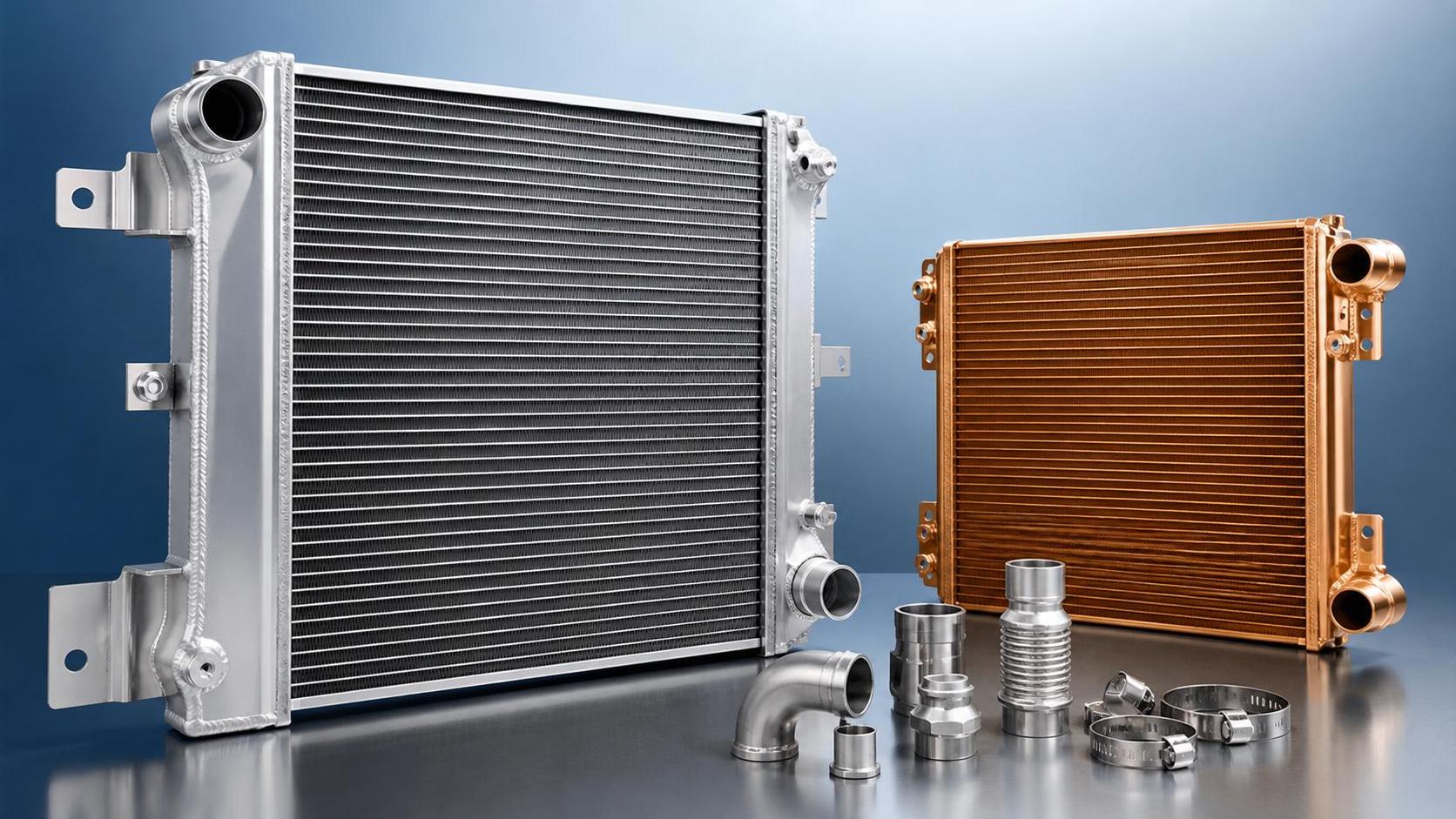
International Radiator Buying Guide: Core Size, Material, and OE Fit Explained
Choosing the right International Radiator is a purchasing decision with long-term consequences.
Cooling performance, replacement frequency, downtime risk, and total cost all depend on getting the specification right.
This is especially true in heavy truck, construction, and commercial fleet applications.
A lower quote may look attractive at first.
But if the radiator core is undersized, the material is poorly matched, or OE fit is inconsistent, the real cost rises quickly.
In practical sourcing, the better approach is to compare performance factors before comparing only unit price.
This guide breaks down how core size, material, and OE fit shape International Radiator performance.
It also shows what to ask suppliers before issuing a final purchase order.
Why International Radiator Selection Matters More Than Price Alone
An International Radiator works under continuous thermal stress, vibration, and varying road conditions.
That means purchasing errors rarely stay small.
A mismatch can lead to overheating, coolant loss, mounting issues, or shortened service life.
For buyers managing fleet cost, the larger issue is hidden expense.
Labor, emergency replacement, logistics disruption, and vehicle downtime can easily exceed the original radiator price difference.
From a market perspective, demand is also shifting toward more stable supply quality.
Buyers increasingly want verified dimensions, stronger brazing quality, and OE-level compatibility.
That change is making technical review a normal part of International Radiator sourcing.
What a better purchasing review should include
- Core dimensions and heat rejection capacity
- Tube, fin, and tank material choice
- OE fit, mounting points, and hose connection accuracy
- Pressure resistance and leak testing process
- Supplier production capability and consistency
How Core Size Affects International Radiator Performance
Core size is one of the most important variables in any International Radiator.
It directly affects cooling surface area, airflow behavior, and coolant circulation efficiency.
In simple terms, the radiator core must match the engine heat load.
If it is too small, heat dissipation becomes unstable during high-load use.
If it is too large without proper fit, installation and airflow may suffer.
The three core size factors that matter most
- Core height and width determine total exposure area to cooling air.
- Core thickness affects internal coolant volume and heat transfer depth.
- Tube row count influences thermal capacity and flow resistance.
In actual procurement, these numbers should not be reviewed separately.
A thicker core is not automatically better.
Excessive thickness can reduce airflow efficiency if the fan system and shroud design stay unchanged.
That is why experienced suppliers evaluate the radiator as part of the full cooling module.
When comparing quotes, ask for exact core dimensions and tube structure.
Avoid approvals based only on external appearance or part photos.
A practical checkpoint
Ask whether the International Radiator has been validated for the same engine load and operating environment.
That question usually reveals whether the supplier is selling by catalog only or by engineering understanding.
Material Choice: Aluminum, Copper-Brass, and Real Cost Implications
Material selection changes the durability profile of an International Radiator.
It also affects weight, corrosion behavior, repairability, and manufacturing consistency.
Most modern heavy-duty radiator programs focus on aluminum designs.
They are lighter, efficient, and widely used in OE and aftermarket supply chains.
Copper-brass options still exist in some applications.
They may offer repair advantages in specific markets, but weight and cost can differ.
How buyers should compare materials
The better question is not only which material is cheaper today.
The better question is which material performs best across the intended service cycle.
For export and volume procurement, stable aluminum manufacturing often offers the strongest balance.
It supports consistency, lighter weight, and broad application coverage.
Manufacturing quality matters as much as raw material grade.
A well-produced aluminum International Radiator usually outperforms a poorly controlled alternative, regardless of label claims.
Why OE Fit Is Critical in International Radiator Procurement
OE fit means more than matching a general vehicle model.
It includes mounting brackets, hose neck position, inlet and outlet size, sensor ports, and overall installation tolerance.
Even a small deviation can create installation delays.
In fleet service, those delays translate directly into labor cost and vehicle inactivity.
This is where many low-cost radiator options become expensive.
OE fit checkpoints before approval
- Confirm OE reference numbers and cross-reference logic
- Verify overall dimensions and core dimensions separately
- Check bracket angle, bolt hole spacing, and tank layout
- Confirm hose diameter, neck direction, and sealing design
- Request inspection photos or drawings before shipment
A useful example is radiator for mack xd93319.
Its matching references include 25173861, 1003347, 1102085, and 1003458 for radiator application review.
For buyers, this kind of cross-reference detail reduces selection error and speeds internal validation.
How to Evaluate a Radiator Supplier Beyond the Catalog
A strong International Radiator program depends on supplier capability, not only product listing depth.
This is especially relevant when order volume increases or mixed models are involved.
A manufacturer with real engineering and production experience can usually respond faster to specification checks and fit questions.
That reduces communication loss during sourcing.
Liaocheng Xinde Auto Parts Co., Ltd. was established in 2018.
With registered capital of 5 million RMB and total investment of 50 million RMB, it focuses on radiator-related manufacturing.
Its product scope includes water tank radiators, intercoolers, construction machinery radiators, heavy truck cooling parts, and new energy radiator modules.
The company has expanded quickly and earned honors such as High-tech Enterprise and Trustworthy Unit for Consumers.
For procurement review, that kind of background signals manufacturing commitment rather than short-term trading activity.
Questions worth asking any supplier
- Do you test pressure resistance and leakage before shipment?
- Can you provide drawings, measurements, or OE cross-reference support?
- What production controls are used for brazing and tank assembly?
- Can you maintain consistency across repeat orders?
- How do you handle application confirmation for export orders?
A Practical Buying Process for Better Cost Control
An efficient International Radiator sourcing process should be simple, repeatable, and technical enough to prevent avoidable mistakes.
The goal is not to create extra paperwork.
The goal is to lower total acquisition risk.
Recommended buying steps
- Start with OE number, vehicle application, and existing radiator photos.
- Confirm core size, material, and mounting structure before price comparison.
- Request fit confirmation documents for each key model.
- Review lead time, packaging, and quality inspection process.
- Test a pilot batch when the application is new or volume is high.
- Track field feedback and repeat order consistency after launch.
This process helps separate true value from low headline pricing.
It also supports better negotiation because technical points become measurable.
Final Takeaway for International Radiator Purchasing
A reliable International Radiator is chosen through specification discipline, not guesswork.
Core size determines whether cooling performance matches the operating load.
Material choice shapes weight, durability, and life-cycle cost.
OE fit decides whether installation is smooth or expensive.
When these three factors are reviewed together, purchasing decisions become more accurate and more defensible.
That is the practical route to lower downtime, steadier supply quality, and better overall cost control.
Before placing the next order, verify the application, confirm the dimensions, and ask for evidence of OE fit and manufacturing consistency.
That final check often makes the difference between a routine replacement and a costly sourcing mistake.