



Heavy Duty Truck Radiator Manufacturer: Signs of Process Control
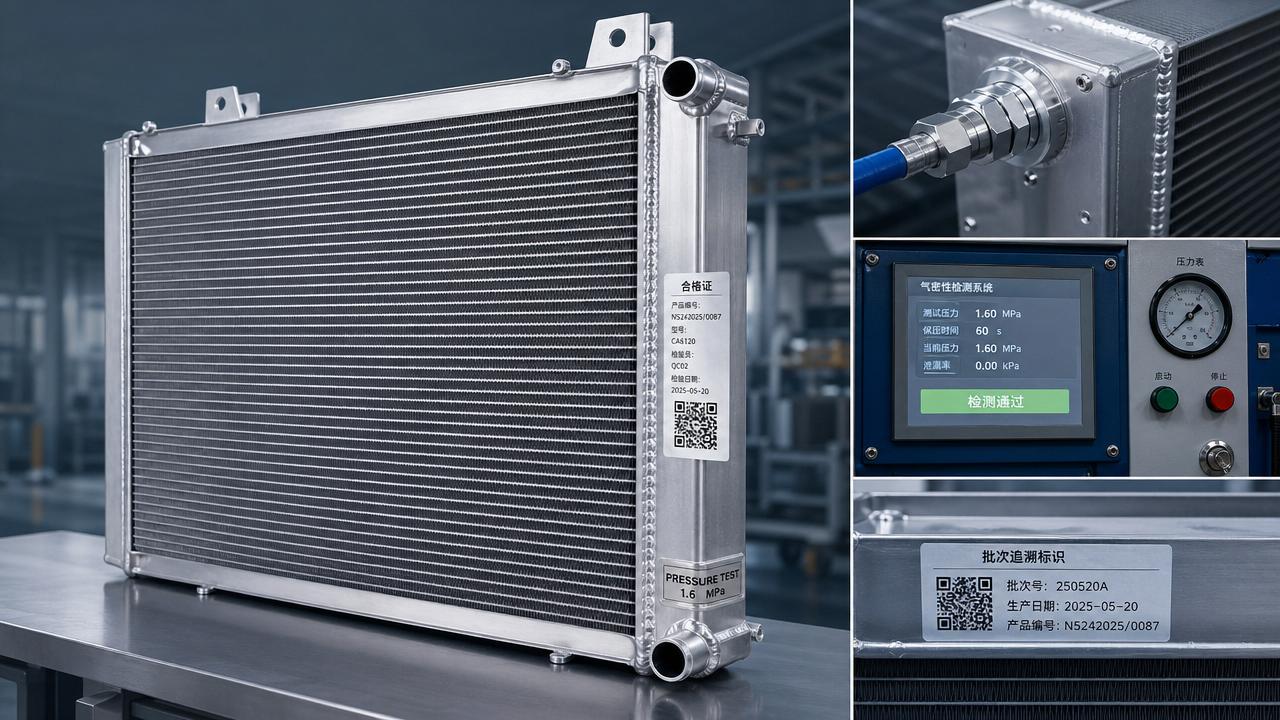
Choosing a reliable heavy duty truck radiator manufacturer starts with understanding the signs of strong process control. For quality control and safety managers, stable welding, material traceability, pressure testing, and consistent thermal performance are not just factory details—they directly affect vehicle safety, uptime, and compliance. This article highlights the key indicators that reveal whether a manufacturer can deliver dependable radiator solutions at scale.
In the parts industry, process control is the difference between a radiator that performs steadily for thousands of operating hours and one that fails under vibration, pressure cycling, or temperature extremes. For fleets, truck OEMs, and safety-focused procurement teams, the cost of a weak radiator is rarely limited to replacement value. It often includes roadside downtime, engine overheating, delayed cargo, and added inspection risk.
Liaocheng Xinde Auto Parts Co., Ltd., established in 2018 with a registered capital of 5 million RMB and a total investment of 50 million RMB, focuses on the research, production, and global sales of water tank radiators, intercoolers, construction machinery radiators, related heavy truck components, and new energy radiator modules. Its rapid expansion and recognition as a High-tech Enterprise, Civilized and Honest Enterprise, and Trustworthy Unit for Consumers reflect a business direction closely aligned with stable manufacturing systems and dependable product delivery.
Why Process Control Matters in Heavy Duty Radiator Manufacturing
A heavy duty truck radiator manufacturer is not judged only by price, catalog size, or production volume. For quality control personnel and safety managers, the real question is whether the factory can maintain repeatability across 100 units, 1,000 units, or multiple production batches over 6 to 12 months. In heavy-duty applications, small process deviations can create large field failures.
Heavy truck cooling systems operate under demanding conditions: continuous vibration, ambient temperatures that may range from below 0°C to above 45°C, and pressure cycles that stress tubes, headers, and joints. If process control is weak, defects often appear first in brazed seams, weld points, fin alignment, or tank sealing. These are not cosmetic issues. They affect heat rejection efficiency, coolant retention, and long-term durability.
For safety and compliance teams, radiator consistency also supports broader system reliability. Poor thermal management can accelerate engine wear, increase the chance of overheating alarms, and shorten service intervals. In practical terms, even a 3% to 5% loss in thermal performance can become critical in high-load transport, steep grade operation, or congested urban duty cycles.
What controlled manufacturing should achieve
- Stable dimensional tolerance so the radiator fits vehicle platforms without repeated adjustment.
- Repeatable pressure resistance so leakage rates stay within internal inspection limits batch after batch.
- Consistent airflow and coolant flow pathways to support predictable thermal output.
- Traceable raw materials and in-process records for faster root-cause analysis if a defect appears.
A capable heavy duty truck radiator manufacturer should therefore be evaluated as a process organization, not just a parts supplier. The strongest factories usually show discipline in incoming material checks, fixture control, brazing parameters, leak testing, and shipment inspection. These indicators can be reviewed before long-term sourcing decisions are made.
Key Signs of Strong Factory-Level Control
When visiting or auditing a factory, process control should be visible in operations, records, and product condition. A heavy duty truck radiator manufacturer with robust controls usually presents clean workstations, defined inspection points, operator instructions, and lot identification from raw aluminum material through final packaging. If traceability stops after assembly, risk increases immediately.
Welding and brazing stability is one of the first signs to check. For aluminum radiator production, heat input consistency and fixture accuracy directly influence joint strength and deformation. If fin collapse, uneven bead appearance, or localized discoloration appear too often, the issue may not be craftsmanship alone. It may indicate unstable temperature windows, inconsistent furnace conditions, or poor handling discipline.
Pressure testing is another high-value checkpoint. Many buyers ask whether a radiator is tested, but experienced QC teams ask how it is tested, at what stage, and how the result is recorded. A reliable process often includes at least one leak test after core assembly and one final verification before packing. Test pressure ranges vary by product design, but the method should be defined, repeatable, and documented.
Operational indicators worth checking
The following table summarizes practical signs that help quality and safety managers distinguish between superficial production capacity and real process maturity.
The key takeaway is that real process control is measurable. A heavy duty truck radiator manufacturer should be able to explain not only what inspection steps exist, but also which defect modes each step is designed to prevent. That level of clarity usually signals a more dependable supplier relationship.
A useful audit question
Ask the factory how it handles a failed pressure test found in final inspection. A mature answer should cover segregation, re-inspection scope, parameter review, batch traceability, and corrective action timing. If the answer is vague or limited to “repair and ship,” the process discipline may not be strong enough for safety-critical sourcing.
How to Evaluate Thermal Performance Consistency and Product Suitability
For a quality team, thermal performance is not just a lab number. It is a consistency issue tied to material quality, fin geometry, coolant path design, and assembly stability. A heavy duty truck radiator manufacturer should be able to show how design intent is protected through production, especially when supply volumes increase or product variants multiply.
In practice, performance consistency can be influenced by core thickness variation, fin density changes, blocked passages, poor header sealing, or inadequate brazing. Even when two units look identical, small differences in airflow resistance or coolant distribution can create uneven heat transfer. This is why procurement based only on appearance or sample approval is risky.
Application fit also matters. In public transportation and mixed fleet environments, radiators may need to support diesel platforms as well as electrified systems. For example, Radiator for Ankai is designed for public transportation use and uses premium-grade aluminum with advanced brazing technology to support optimal thermal management for both traditional diesel and new energy electric buses. For safety managers, that combination is relevant because stable cooling can help minimize downtime and maximize engine or system life.
Typical evaluation points for thermal reliability
- Check whether the supplier verifies cooling performance across at least 2 to 3 operating scenarios, such as low-speed urban duty, high-load highway duty, and elevated ambient conditions.
- Review whether aluminum grade, core structure, and joining method remain stable when production batches increase.
- Confirm that field application feedback is tied back to engineering changes within a defined cycle, ideally within 2 to 4 weeks for urgent quality issues.
The table below can be used as a buyer-side checklist when comparing supplier claims with actual suitability for heavy-duty and fleet applications.
A quality-focused buyer should interpret thermal claims in the context of repeatability. One strong sample is not enough. The heavy duty truck radiator manufacturer should show that the same cooling behavior can be reproduced with stable materials, controlled joining, and clear inspection gates.
Supplier Assessment Framework for QC and Safety Teams
Selecting a heavy duty truck radiator manufacturer becomes easier when the evaluation framework is practical and cross-functional. QC managers often focus on nonconformity risk, while safety managers focus on field consequences and escalation response. Procurement teams, in contrast, may emphasize lead time and cost. A balanced assessment should bring these priorities together in one decision matrix.
A useful approach is to score suppliers across 4 major dimensions: process stability, traceability, validation capability, and response speed. This reduces the risk of choosing a supplier that performs well in sample development but struggles during mass production. It also helps identify whether a supplier can support new energy radiator modules alongside conventional heavy truck cooling products.
Liaocheng Xinde Auto Parts Co., Ltd. operates in product categories that demand this type of assessment, including water tank radiators, intercoolers, construction machinery radiators, and related heavy truck components. For buyers, that product range means the supplier evaluation should consider not only single-item quality, but also the ability to maintain control across multiple part families and application conditions.
Recommended scoring model
Before final nomination, many teams use a weighted review method. The following example can support internal discussion and supplier comparison.
This kind of model helps move the decision beyond unit price. A supplier with a lead time of 15 to 25 days but strong control may create less total risk than a lower-cost source with weak records, unstable leak test results, or slow response to field issues. For critical fleets, total lifecycle reliability usually outweighs short-term savings.
Common assessment mistakes
- Approving a supplier after sample success without reviewing process repeatability over multiple batches.
- Accepting generic quality claims without checking actual test records and rejection handling flow.
- Ignoring application complexity, especially where heavy truck and new energy cooling requirements differ.
- Failing to define escalation times, such as a 24-hour containment update and a 7-day corrective action plan.
Implementation, Risk Prevention, and Ongoing Quality Assurance
Even after supplier selection, process control must be verified through implementation. A heavy duty truck radiator manufacturer may show strong capability during audit, but the true test is whether documentation, packaging, shipment handling, and batch release remain controlled during live orders. The first 3 shipments are especially important because many hidden issues appear during ramp-up rather than sampling.
For QC and safety teams, incoming inspection should focus on the highest-risk points first: mounting dimensions, visible seam integrity, pressure retention, labeling accuracy, and packaging protection. If the product is intended for vibration-intensive or public transportation duty, corrosion resistance and structural stability deserve added attention. In bus-related use cases, solutions such as the Radiator for Ankai illustrate why material quality and brazing consistency matter well beyond the factory floor.
A structured launch plan can reduce claims and improve long-term cooperation. Instead of relying on ad hoc communication, define milestones, review intervals, and escalation rules before the first mass order is released. This is especially useful when the supplier supports more than one platform, such as heavy trucks, construction machinery, and selected new energy applications.
A practical 5-step control plan
- Approve the control plan and critical characteristics before purchase order release.
- Request batch-level traceability and final test records for the first 1 to 3 shipments.
- Perform incoming inspection on agreed checkpoints with clear acceptance thresholds.
- Track field feedback for the first 60 to 90 days after installation or fleet deployment.
- Review defect trends quarterly and update corrective actions, drawings, or packaging methods as needed.
FAQ for quality and safety decision-makers
How many inspection points are reasonable for incoming radiator checks?
A practical starting point is 5 to 8 checkpoints, including fitment dimensions, surface damage, seam appearance, labeling, packaging condition, and leak-related evidence. For high-risk launches, teams may add material identification and sampling-based pressure verification depending on internal policy.
What lead time is typical for heavy-duty radiator supply?
Lead times vary by tooling readiness, order volume, and product complexity. For standard repeat orders, 15 to 30 days is a common planning range. New development, validation changes, or mixed-model production may require 3 to 6 weeks or longer depending on technical review depth.
What is the biggest warning sign during supplier evaluation?
A major warning sign is the inability to connect defects to process data. If a heavy duty truck radiator manufacturer cannot explain which batch, parameter set, or inspection stage is related to a failed unit, then corrective action will likely be slow and incomplete. That creates repeat-failure risk in the field.
For organizations that value uptime, compliance, and long-term durability, strong process control is not optional. It is the operating foundation behind stable radiator performance, predictable delivery, and lower quality risk. If you are evaluating suppliers for heavy truck, construction machinery, or new energy cooling applications, contact us to discuss product details, review your quality requirements, or get a tailored solution for your sourcing program.