



Heavy Duty Truck Radiator Cooling System Problems to Catch Early
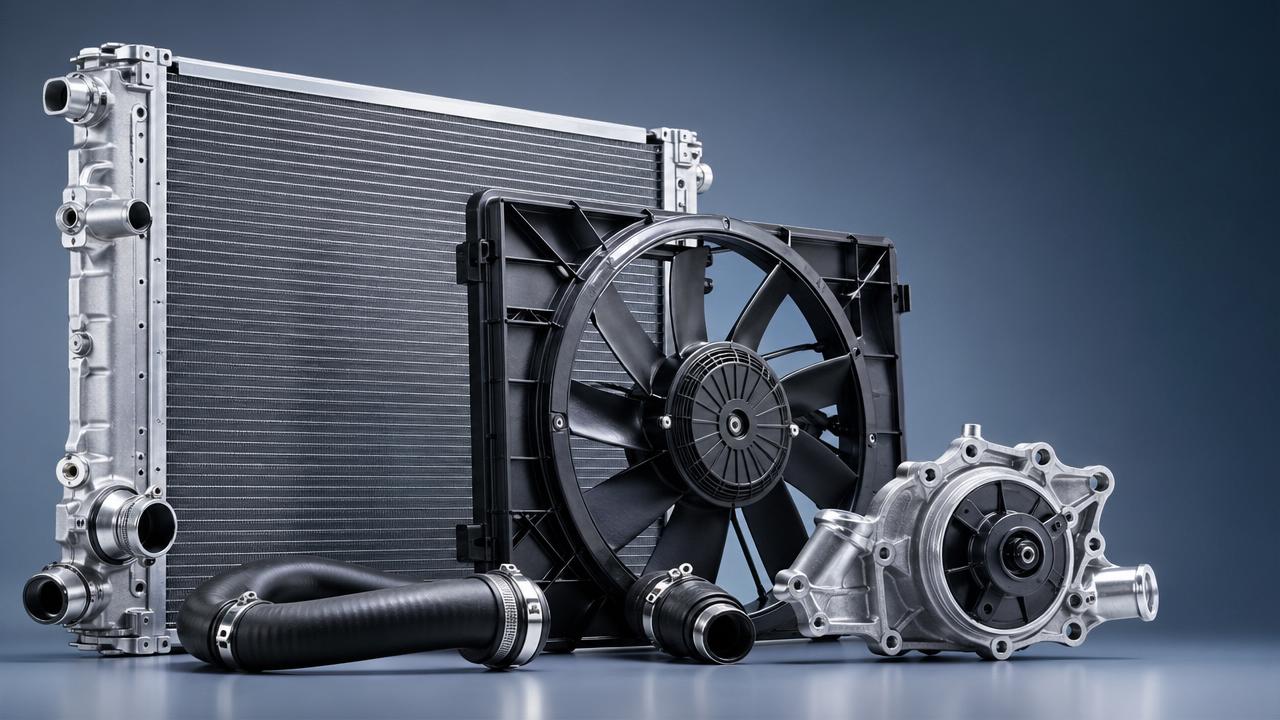
Heavy duty truck radiator cooling system issues often start small but can quickly lead to overheating, power loss, and costly downtime if ignored. For drivers and operators, catching early warning signs such as coolant leaks, clogged cores, weak airflow, or rising engine temperatures is essential to keeping trucks reliable on the road. This guide explains the common problems you should spot before they turn into major repairs.
Why a checklist approach works best for early cooling system detection
For operators, the biggest mistake is waiting for a dashboard alarm before checking the heavy duty truck radiator cooling system. By the time a truck is fully overheating, the real problem may already have spread from the radiator to the fan, water pump, hoses, thermostat, or even the cylinder head. A checklist helps you catch small changes before they become expensive failures.
A good inspection routine also saves time. Instead of guessing why engine temperature is climbing on a loaded route, you can move through the most likely causes in order: coolant level, visible leakage, airflow blockage, fan operation, hose pressure, and radiator core condition. This is faster, more reliable, and safer than replacing parts without diagnosis.
The heavy duty truck radiator cooling system works under high thermal load, especially in long-haul, mining, construction, and stop-start delivery use. Dust, vibration, high ambient temperatures, and long operating hours all increase the chance of early wear. Operators who know what to check can reduce breakdown risk and protect engine efficiency.
What should be confirmed first
- Is the temperature gauge rising more often than normal under the same load?
- Are there signs of coolant loss, wet spots, or dried residue around hoses and tanks?
- Is airflow through the radiator blocked by dirt, mud, insects, or bent fins?
- Is the fan engaging correctly, especially during idle or low-speed operation?
- Has there been any recent repair, refill, or coolant type change that could affect performance?
Core checklist: the early radiator cooling system problems you should never ignore
Most heavy duty truck radiator cooling system failures show warning signs before a complete overheating event. The key is to distinguish between a surface symptom and the root cause. A rising temperature gauge does not always mean the radiator itself is bad; it may be a cap issue, trapped air, weak circulation, or restricted airflow.
Start with the visible and measurable items. If the system is losing coolant, running hotter uphill, or cooling poorly during idle, each pattern points to a different inspection path. Operators who record these patterns make troubleshooting much easier for the workshop team.
Use the following checklist as your practical first pass before damage spreads.
1) Coolant leaks and coolant loss
Even a slow leak can weaken the heavy duty truck radiator cooling system over time. Look for drips, wet hose ends, stains on the radiator core, residue near the expansion tank, or a sweet smell after shutdown. Coolant may also leak only when the system is hot and pressurized, so a cold visual check is not always enough.
Check these leak points
- Upper and lower radiator hose connections
- Plastic or metal tank seams
- Drain plug and cap sealing area
- Water pump weep hole
- Heater circuit and connecting lines
2) Clogged radiator core and restricted heat transfer
External blockage is common in trucks operating on dusty roads, construction sites, agricultural routes, and industrial yards. Mud, oil mist, cotton fiber, leaves, and road debris reduce airflow across the fins. Internal clogging can also develop from poor coolant quality, scale, rust, or mixed coolant chemistry.
Typical signs include higher operating temperature under load, poor cooling at low road speed, and uneven temperature across the radiator surface. If one section is much cooler than another after operation, flow may be restricted internally.
3) Weak airflow and fan-related problems
When the heavy duty truck radiator cooling system runs hot in traffic, at idle, or during yard operation, fan performance should be checked early. A worn fan clutch, faulty electric fan control, damaged shroud, or belt issue can all reduce airflow even if the radiator itself is still in good condition.
Do not ignore fan noise changes. A fan that engages too late, cycles abnormally, or never reaches full pull can allow temperature to spike quickly when vehicle speed drops.
4) Pressure problems, cap failure, and hose collapse
System pressure raises the coolant boiling point. If the radiator cap no longer holds pressure, boiling may start earlier, causing overflow, steam, and unstable temperature readings. On the other side, a weak hose or blocked vent may lead to hose collapse and reduced circulation after cooldown.
This is why a cheap cap can create a costly overheating case. Operators should treat pressure control components as service items, not permanent parts.
Quick diagnosis table: symptom, likely cause, and your next check
The table below helps connect field symptoms to the most likely heavy duty truck radiator cooling system problem. It is not a replacement for workshop testing, but it gives operators a practical decision sequence.
If replacement is required, matching dimensions, vehicle application, and cooling capacity matters. For example, operators sourcing a radiator for MAN truck applications may compare fitment items such as XD045 MAN F2000 19.603, a TRUCK radiator model associated with F2000, 19.603, 81061016421, and size 1065*688*48.
What changes by operating condition: load, route, climate, and duty cycle
Not every truck shows cooling problems in the same way. The heavy duty truck radiator cooling system may seem normal on a short flat route but struggle badly in mountains, extreme heat, or repeated stop-start work. That is why operators should judge symptoms based on real operating conditions, not only workshop idle tests.
A truck carrying heavy loads at low speed needs stronger airflow and stable coolant circulation. A truck in dusty environments needs more frequent external cleaning. A truck running long highway distances may hide early leakage because airflow keeps temperatures under control until the system is already low.
Use scenario-based checks to avoid missing condition-specific warning signs.
Scenario checklist
- Construction or off-road use: Inspect fins for mud packing, stones, and bent areas; confirm no debris is trapped between cooling pack layers.
- High-temperature regions: Watch for cap weakness, coolant evaporation, and fan performance under peak afternoon load.
- Urban stop-start fleets: Prioritize fan clutch, electric controls, and shroud sealing because low-speed airflow becomes critical.
- Long-haul operation: Track slow coolant loss and inspect hose aging since problems may not appear until extended grades.
Commonly missed risk points that make overheating worse
Many operators focus only on the radiator face and miss the supporting parts that control cooling stability. In reality, the heavy duty truck radiator cooling system depends on several connected components. If one weak link is ignored, the whole system can underperform even after cleaning or part replacement.
Another common issue is using the wrong maintenance method. High-pressure washing at the wrong angle can fold fins, while mixing incompatible coolant types can create deposits that reduce heat transfer. Small maintenance shortcuts often create larger reliability problems later.
Pay special attention to these overlooked risk factors.
Often ignored items
- Air trapped in the system after refill or repair
- Loose belt tension affecting water pump or fan drive
- Damaged fan shroud reducing airflow efficiency
- Poor-quality replacement cap or hose material
- Corrosion caused by incorrect coolant concentration
- Stacked cooling modules blocked by dirt between layers
A note on replacement quality
When a radiator is damaged beyond cleaning or repair, choosing the correct replacement matters as much as installation quality. Heavy truck applications require proper fit, durable materials, and stable thermal performance under vibration and load. Manufacturers such as Liaocheng Xinde Auto Parts Co., Ltd., established in 2018 and focused on radiators, intercoolers, construction machinery radiators, and new energy radiator modules, represent the kind of specialized production background many buyers review when evaluating supply reliability and technical capability.
Practical operator actions: what to inspect daily, weekly, and before long trips
A strong heavy duty truck radiator cooling system maintenance routine does not need to be complicated. It needs to be consistent. Short, repeated inspections are more effective than waiting for a major service interval to discover damage that has already progressed.
Drivers and operators are in the best position to notice pattern changes early. A workshop may see the truck once in a while, but the person using it every day can spot higher-than-normal temperature, coolant odor, unusual fan sound, or repeated top-offs immediately.
The checklist below helps turn that awareness into action.
Routine inspection plan
When to stop operating immediately
Stop and investigate if the temperature climbs rapidly, steam appears, coolant pours out, the fan stops functioning, or power drops together with overheating. Continuing to drive can turn a cooling issue into gasket damage, warped components, or major engine repair.
If you are preparing to replace a failed unit, comparing model details carefully is essential; some buyers reviewing MAN truck fitment may also encounter XD045 MAN F2000 19.603 during sourcing, especially where exact size and application alignment are important.
Final checklist before you discuss repair, replacement, or sourcing
Before contacting a repair team or supplier, prepare the right information. This makes diagnosis faster and helps avoid ordering the wrong heavy duty truck radiator cooling system component. Clear details also improve the chance of identifying whether the issue is a radiator fault, installation issue, or broader cooling circuit problem.
The most useful information includes vehicle model, operating conditions, exact symptom pattern, coolant loss history, recent repairs, and visible damage points. If a replacement is needed, confirm dimensions, OE or cross-reference numbers, mounting layout, and application scenario.
In short, early action is what protects uptime. If you need to confirm parameters, fitment, cooling capacity, lead time, budget, or cooperation details, prioritize a discussion around model number, size, usage environment, failure symptoms, and expected service life before making the final decision.