



DAF MAN Radiator Troubleshooting: Why Trucks Overheat After a New Installation
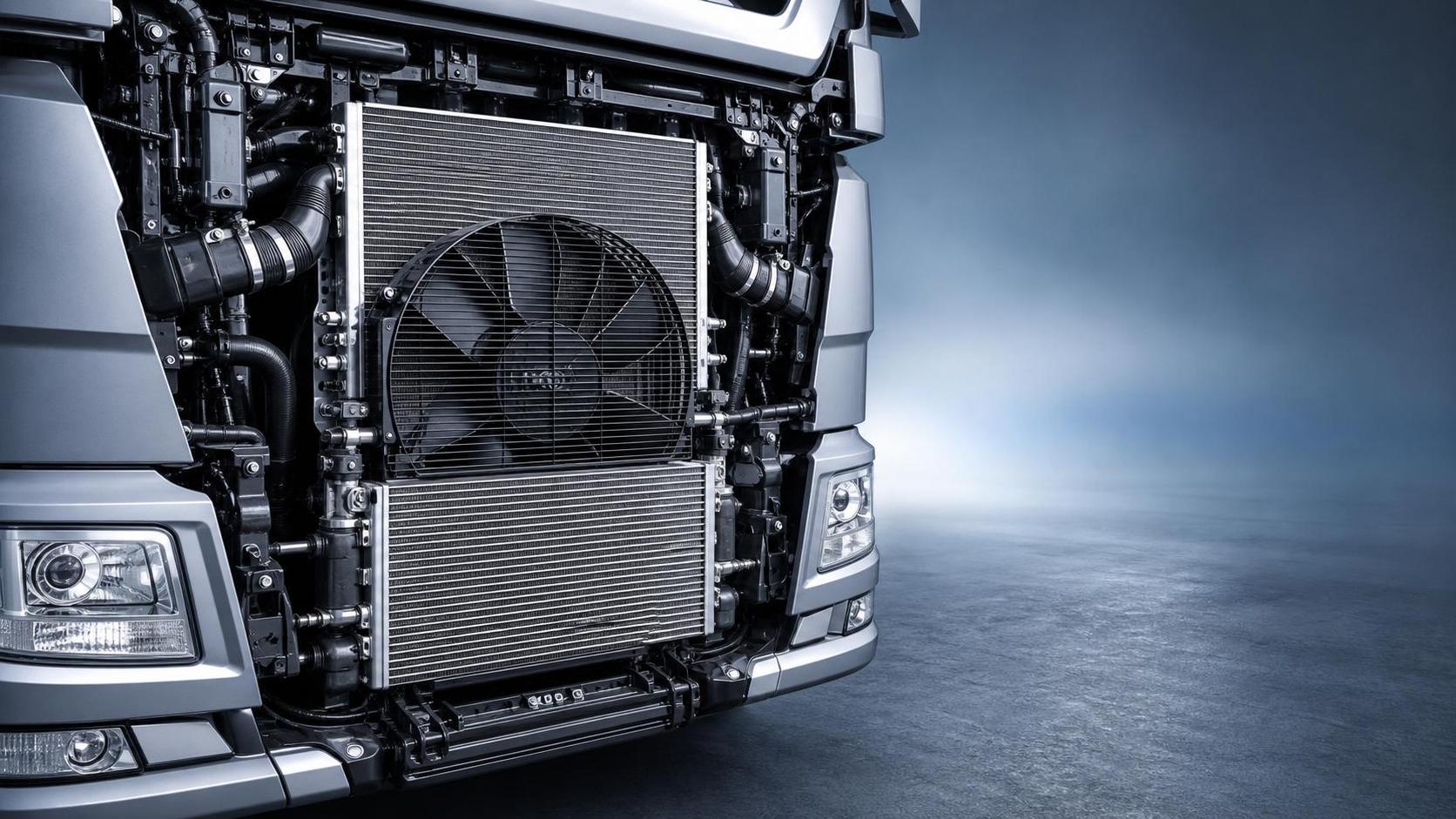
Why a New DAF MAN Radiator Still Fails in Real Road Conditions
A new DAF MAN Radiator should reduce operating temperature, not push it higher.
When overheating appears right after installation, the radiator is often blamed first.
In practice, the core may be only one part of the problem.
Heavy trucks work under very different loads, routes, climates, and maintenance habits.
That is why the same DAF MAN Radiator can behave differently across fleets.
The more useful approach is to inspect the cooling system as a whole.
Liaocheng Xinde Auto Parts Co., Ltd., established in 2018, focuses on radiator and intercooler manufacturing for heavy-duty applications.
That background matters because aftermarket cooling issues rarely come from one visible part alone.
Fast troubleshooting reduces repeat repairs, protects uptime, and avoids customer complaints after replacement work.
Actual Use Starts With the Operating Scenario
Overheating after installing a DAF MAN Radiator usually follows a pattern tied to how the truck is used.
A long-haul tractor on open roads stresses airflow differently than a city truck in stop-and-go traffic.
Construction and mixed-road vehicles create another layer of risk through dust, vibration, and unstable engine speed.
In colder regions, hidden air pockets and thermostat behavior are common triggers.
In hotter regions, fan performance and coolant concentration matter more than many workshops expect.
So the correct question is not only whether the radiator is new.
The better question is whether the installed unit matches the truck, duty cycle, and surrounding components.
The first checks should stay practical
- Confirm the radiator part number and cooling capacity against engine specification.
- Inspect coolant flow direction, hose routing, and connector sealing.
- Check whether shrouds, fan clutch, and mounting points were reinstalled correctly.
- Verify that the system was fully bled after replacement.
- Measure temperature at inlet, outlet, and engine return points.
On Highway Trucks, Airflow Problems Often Hide Behind a New Core
A highway truck may run normally at idle, then overheat under sustained speed and load.
This often suggests airflow imbalance rather than a defective DAF MAN Radiator.
Bent condenser fins, blocked charge air cooler passages, or missing seals can disturb front-end air movement.
The radiator then receives less effective cooling air, even if the core itself is new.
Another frequent issue is fan clutch response that weakens only when the engine reaches real road temperature.
In workshop tests, the clutch may seem acceptable.
Under uphill pulling, it may fail to lock with enough force.
This is why road simulation or loaded testing gives better answers than idle inspection alone.
In Urban and Distribution Work, Flow Restriction Becomes More Obvious
City trucks build heat at lower speed, where natural airflow is limited.
If a DAF MAN Radiator was replaced after a previous failure, internal contamination may still remain elsewhere.
Scale, gasket debris, and old sealant often collect in narrow coolant passages.
That restriction reduces circulation and creates local hot spots inside the engine.
Water pumps also deserve closer attention in this scenario.
A worn impeller can move enough coolant for light operation, yet fail during repeated acceleration and braking cycles.
Thermostats create similar confusion.
They may open late, open partially, or react slowly after replacement work disturbed the system.
What usually separates a quick fix from a repeat failure
In urban service, flushing quality matters almost as much as radiator quality.
Replacing the core without cleaning the full circuit often leads to the same complaint within weeks.
Dusty or Harsh Routes Change the Judgment Standard
On construction roads or mixed-terrain routes, overheating after a DAF MAN Radiator installation needs a different lens.
External blockage becomes more important than internal restriction.
Mud, oil mist, and fine dust form a dense layer between the condenser, intercooler, and radiator.
Even a high-quality new unit cannot cool properly when the stack cannot breathe.
Mounting stress is another overlooked factor.
If brackets are misaligned, the radiator may twist under vibration.
That can affect sealing, hose life, and long-term core durability.
This is where manufacturing consistency matters.
Companies with established production control, material inspection, and heavy-truck experience usually reduce fitment variation.
Different Cooling Jobs Need Different Fitment Decisions
Not every replacement decision should start from price or visible size alone.
Core thickness, tube layout, fin density, and material balance affect real cooling behavior.
A unit that fits physically may still underperform in a heavy-load application.
That is why experienced parts suppliers compare use conditions, not only drawings.
A useful reference is how other heavy-duty radiators are specified across platforms.
For example, XD029 radiator for VOLVO is identified by model 100314589 and size 945*728*48mm.
That kind of precise fitment data helps show why cooling parts cannot be matched by appearance alone.
Common mistakes during replacement selection
- Using an interchangeable-looking core without confirming heat rejection requirement.
- Ignoring the condition of the fan, pump, or thermostat because the radiator is new.
- Comparing only purchase cost, while overlooking labor for repeat removal.
- Assuming similar truck platforms share identical mounting and airflow layouts.
Misdiagnosis Usually Comes From Looking at One Number Only
One temperature reading is rarely enough to judge a DAF MAN Radiator problem.
If the top tank is hot and the lower section stays cool, flow may be restricted.
If both tanks are hot, but engine temperature still climbs, airflow may be insufficient.
If temperature spikes quickly after installation, trapped air is a serious possibility.
When temperature rises slowly over several days, contamination or fan control problems are more likely.
These patterns matter more than replacing another radiator on suspicion.
A practical diagnostic order
- Confirm the complaint under real load, not only at idle.
- Compare inlet and outlet temperatures across the cooling stack.
- Check coolant level, bleed quality, and pressure cap condition.
- Inspect fan engagement, shroud position, and surrounding airflow path.
- Review pump, thermostat, and hose collapse under operating vacuum.
Before the Next Replacement, Build a Better Fitment Standard
A DAF MAN Radiator should be judged by application results, not by installation completion alone.
The right fix depends on route type, engine load, climate, airflow condition, and coolant circuit health.
In actual service, the strongest results come from matching the part to the system and the system to the job.
The next step is straightforward.
Document the overheating condition, compare operating scenarios, and verify the surrounding components before changing parts again.
That approach reduces downtime, clarifies root cause, and makes future radiator selection more reliable.